The quick version
- A 3-hour Funchal catamaran tour with dolphin and whale watching, from US$46.[1]
- Skip the ticket line and head straight aboard for the luxury catamaran cruise.[1]
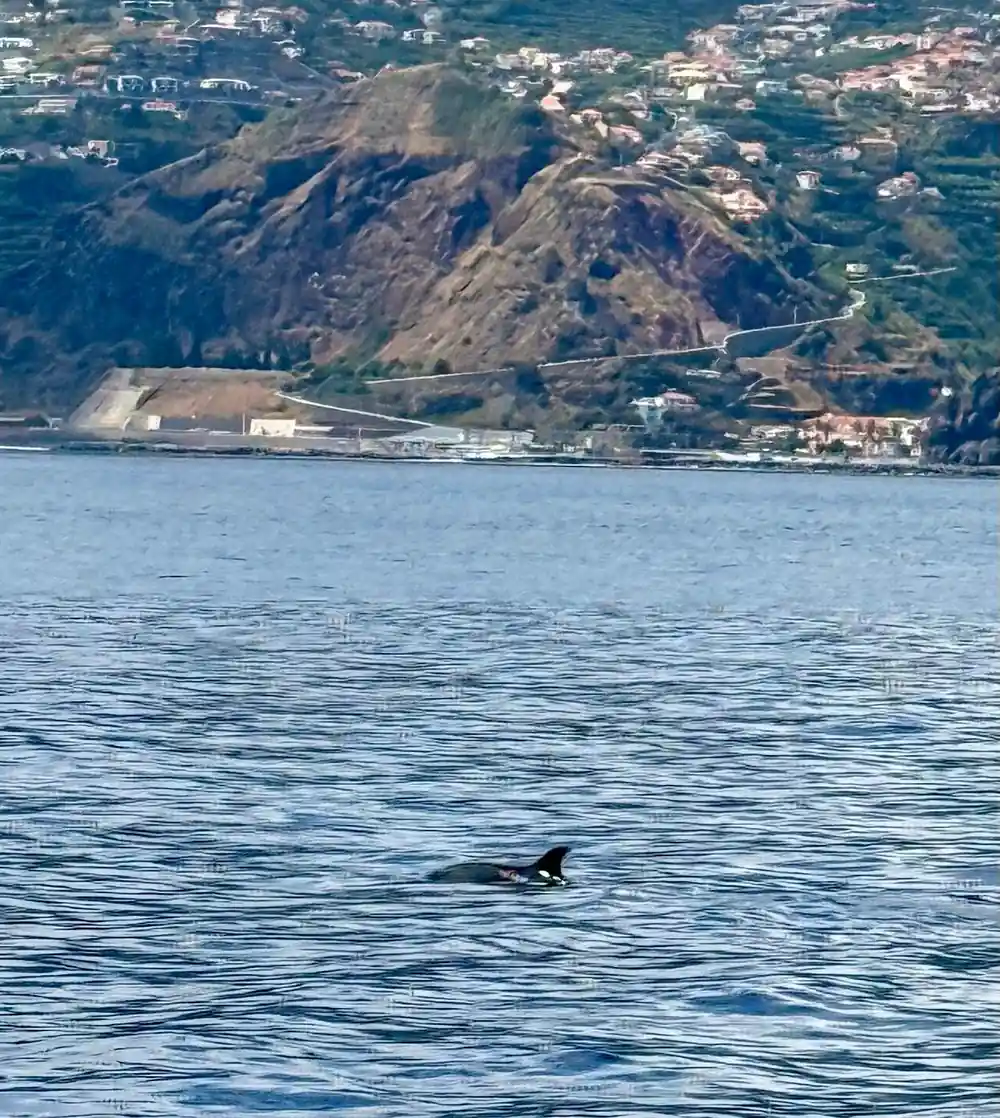
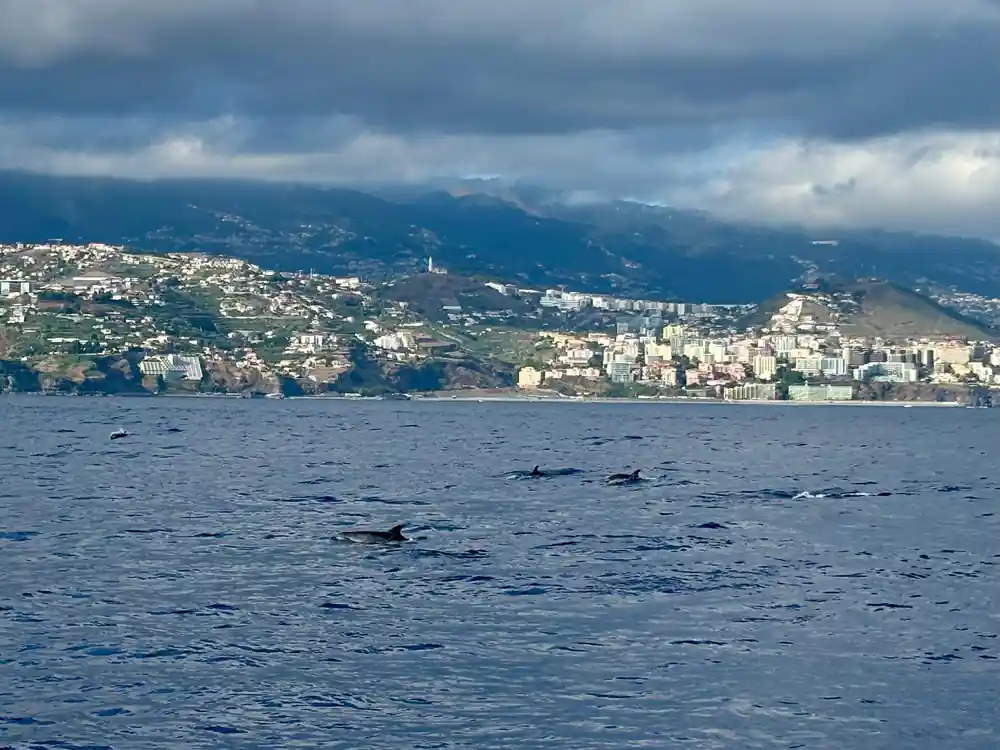
- Bottlenose dolphins, together with short-finned pilot whales, are seen year-round near Madeira.[2]
- The cruise runs past Cabo Girao Cliff, which rises 580 metres above the Atlantic.[1][3]
- Book today and pay later; cancellations remain free until 24 hours beforehand.[1]
- Top choice Funchal Bay Catamaran from US$46 Duration3 hours[1]GuidePortuguese, English[1]RouteSecret stop, Cabo Girao Cliff[1]CancellationFree up to 24 hours[1] Check availability
- All-Inclusive Luxury Tour from US$91 Duration3 hours[4]GuideEnglish, Portuguese, Spanish[4]RouteSecret stop, Cabo Girao Cliff[4]CancellationFree up to 24 hours[4] See this tour
- Responsible Whale Watch from US$62 Duration2 hours[5]GuideEnglish[5]RouteAtlantic Ocean[5]CancellationFree up to 24 hours[5] See this tour
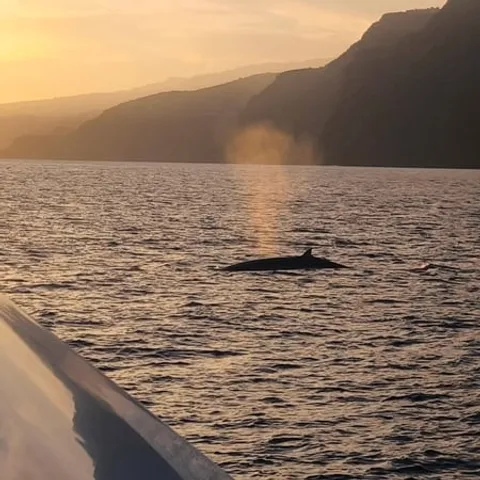
Bottlenose dolphins and short-finned pilot whales can be encountered all year round, along with deep divers like sperm whales and beaked whales.
A relaxed cruise with a real chance of dolphins
Trip essentials
Checking in and getting aboard
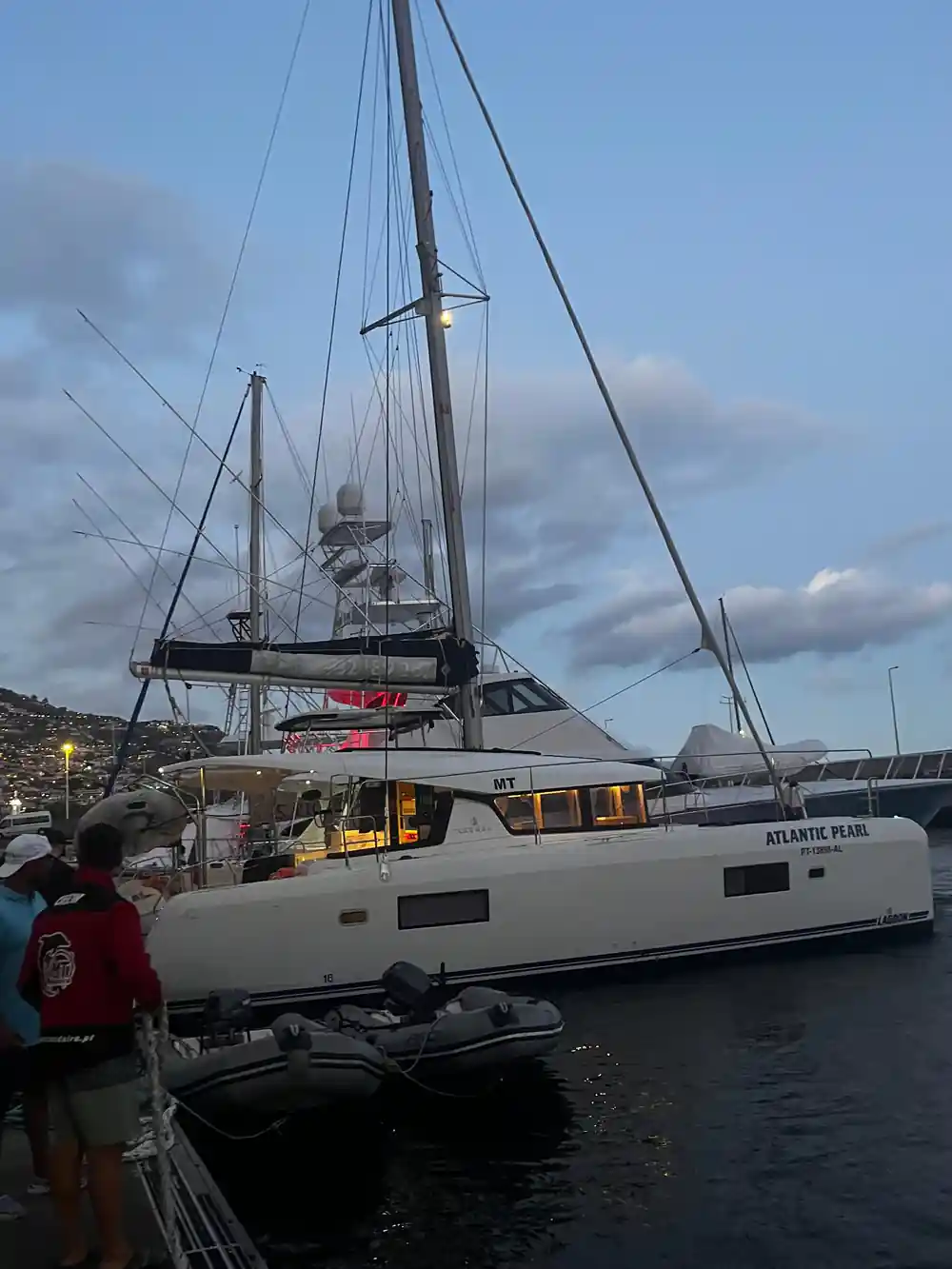
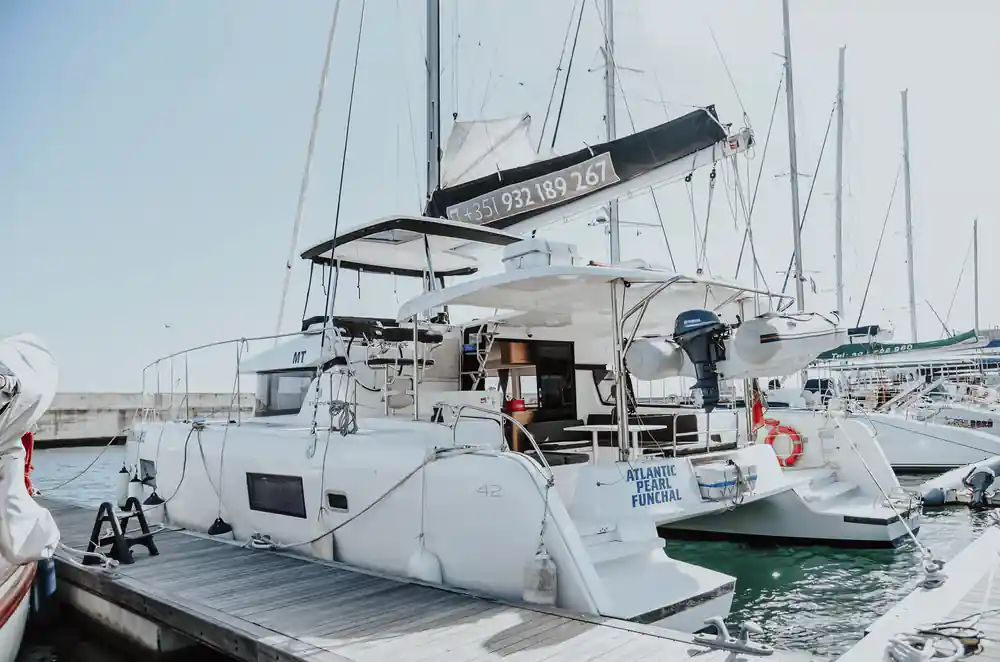
Funchal's marina is an easy place to start a day on the water. The meeting point for the Funchal Bay Dolphin and Whale Watch Luxury Catamaran Cruise is close to the old town, and the boarding routine is relaxed. With the skip-the-ticket-line perk, you head straight to the gangway once you arrive.[1] The cruise itself runs for 3 hours, which gives you time to settle in without feeling rushed.[1] Have your confirmation ready and you will be directed to the right pontoon.
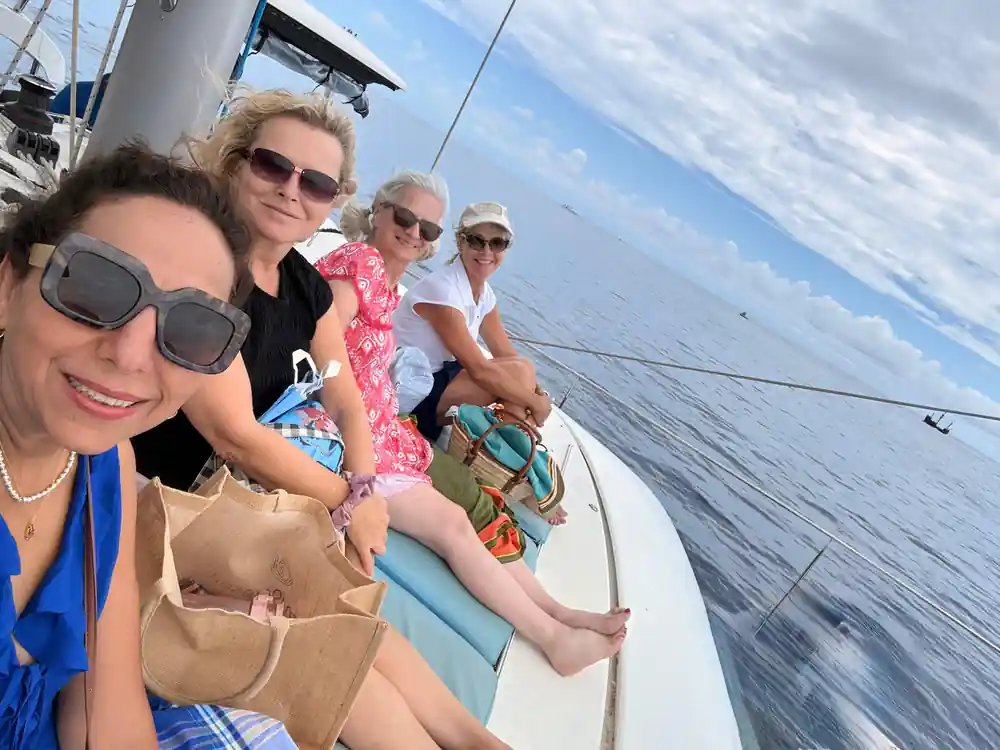
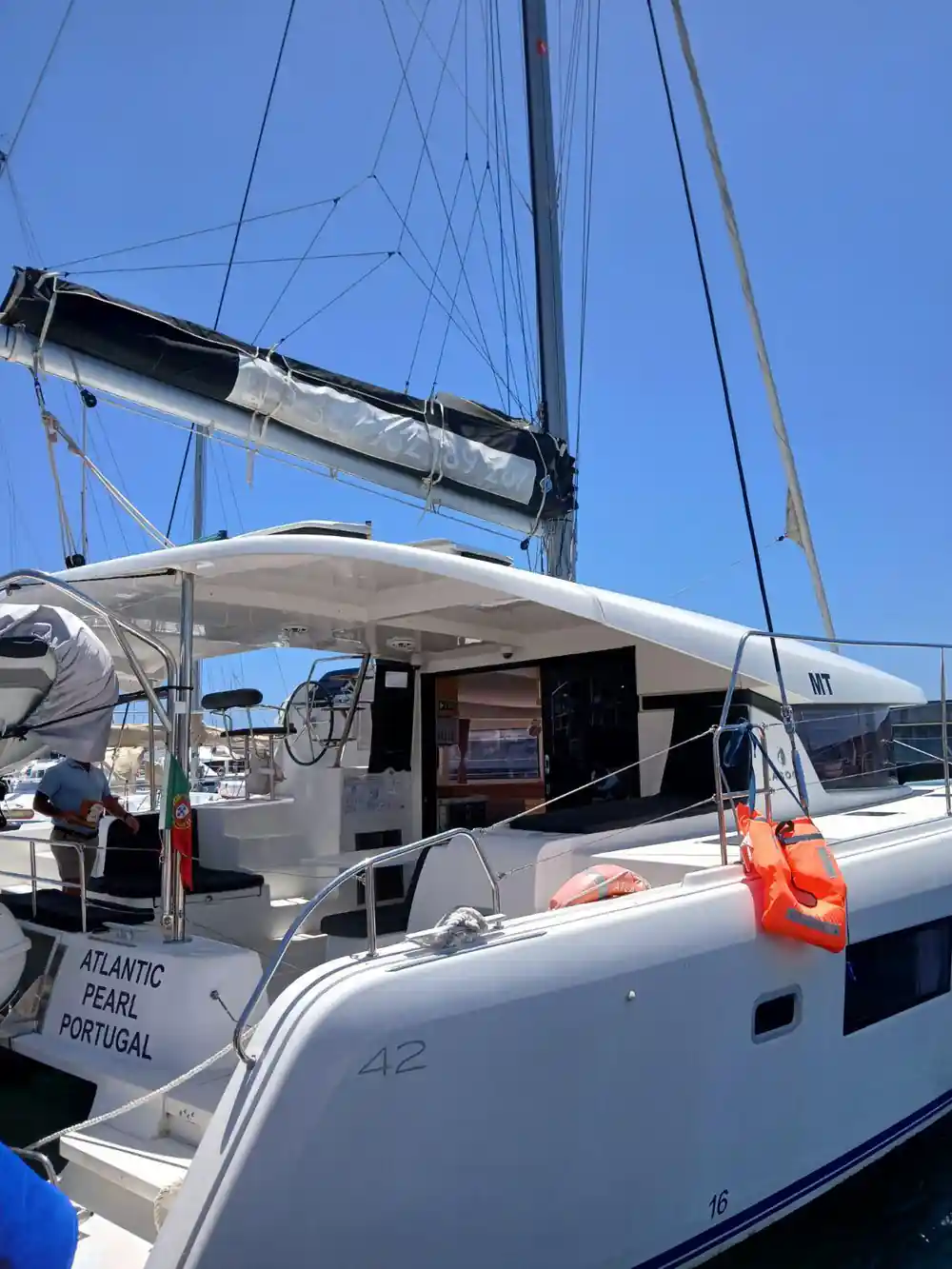
On board, the crew welcomes you in Portuguese and English, so first-timers and international visitors are both covered.[1] There is plenty of deck space, shaded areas and a saloon below if the sun gets too strong. You can buy this Funchal catamaran tour from US$46, and the booking terms let you reserve now and pay later.[1] If you tend to feel the motion, a spot on the lower deck towards the middle is often the most comfortable place to start.
Take a few minutes to find your own corner before the boat moves. The nets at the bow are lovely in calm water, while the cockpit keeps you out of the wind. A light jacket, sunscreen and a strap for your phone or camera are worth having. The crew will also tell you where the life jackets are stored, which is reassuring for first-timers.
Out of the marina and into deep water
Once the lines are cast off, the catamaran motors out of the marina and along the coast. The water changes quickly. The ocean just five kilometres from Madeira can exceed 3,000 metres in depth, and the steep sea floor brings deep-water species close to the island.[7] A short boat trip can feel like an expedition, even though the harbour is still in sight.
For a territory this small, 27 cetacean species confirmed in Madeira's waters is an impressive figure.[2] Reliable year-round sightings include bottlenose dolphins and short-finned pilot whales; Atlantic spotted dolphins and rare blue whales appear by season.[2] The geology helps too: underwater slopes and canyons create the kind of habitat that draws these animals in.
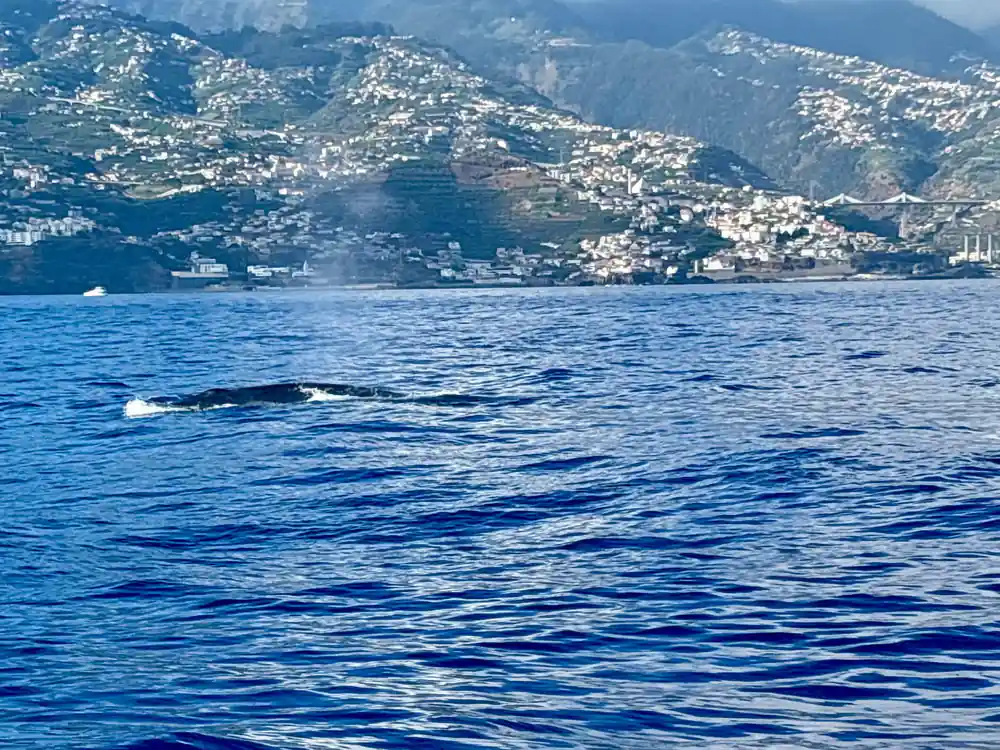
At sea, the coast of Madeira unfolds slowly. The dark volcanic cliffs are cut by valleys, and the island rises steeply from the water. Even before any wildlife appears, there is plenty to look at, from tiny fishing boats to the way the light moves across the hills. Keep your eyes on both the horizon and the water beside the boat, because dolphins often appear without warning.
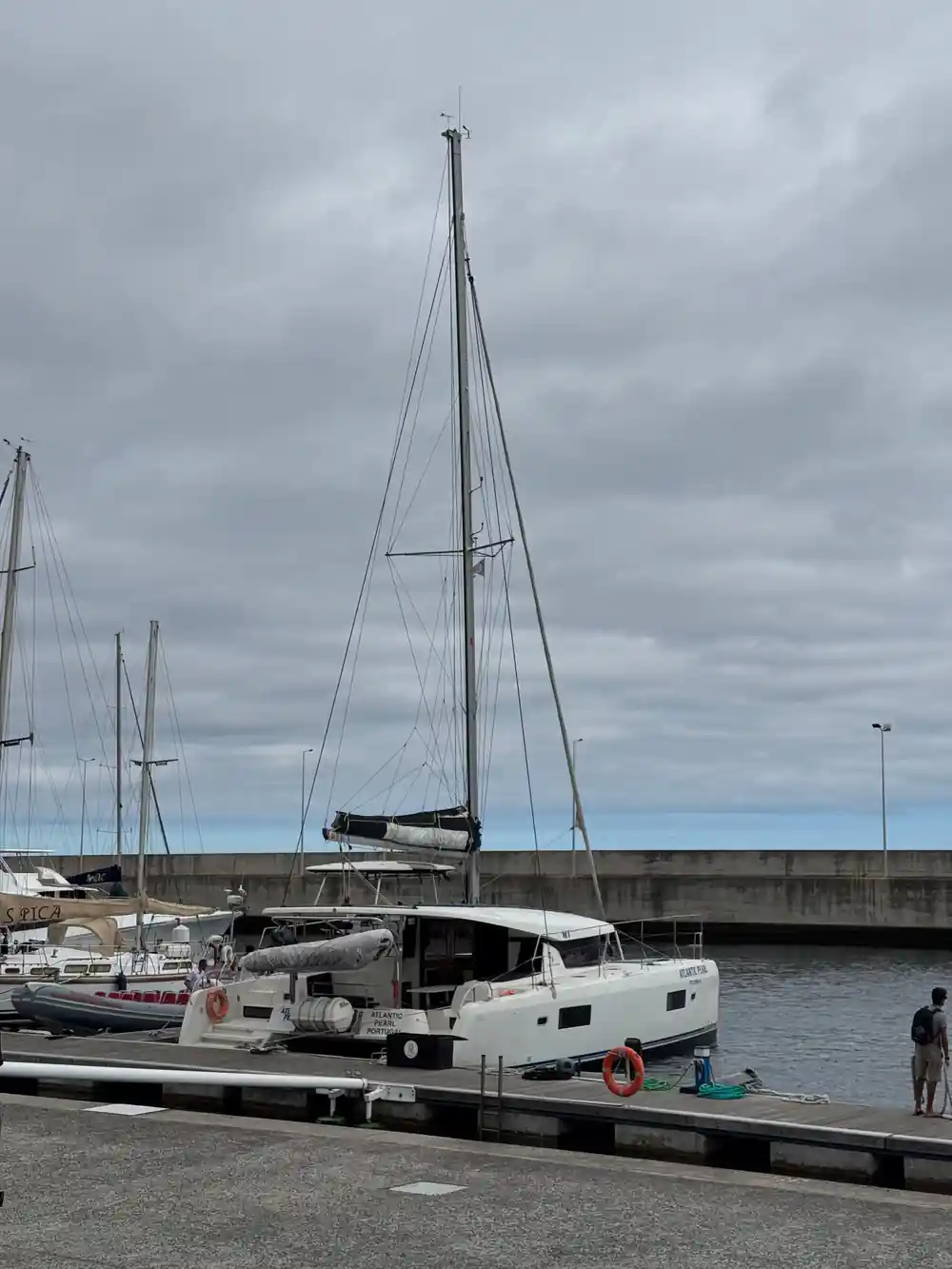
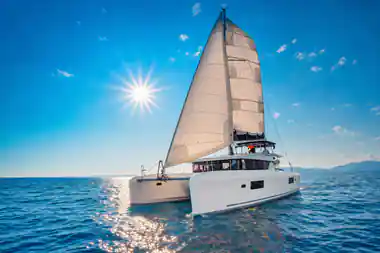
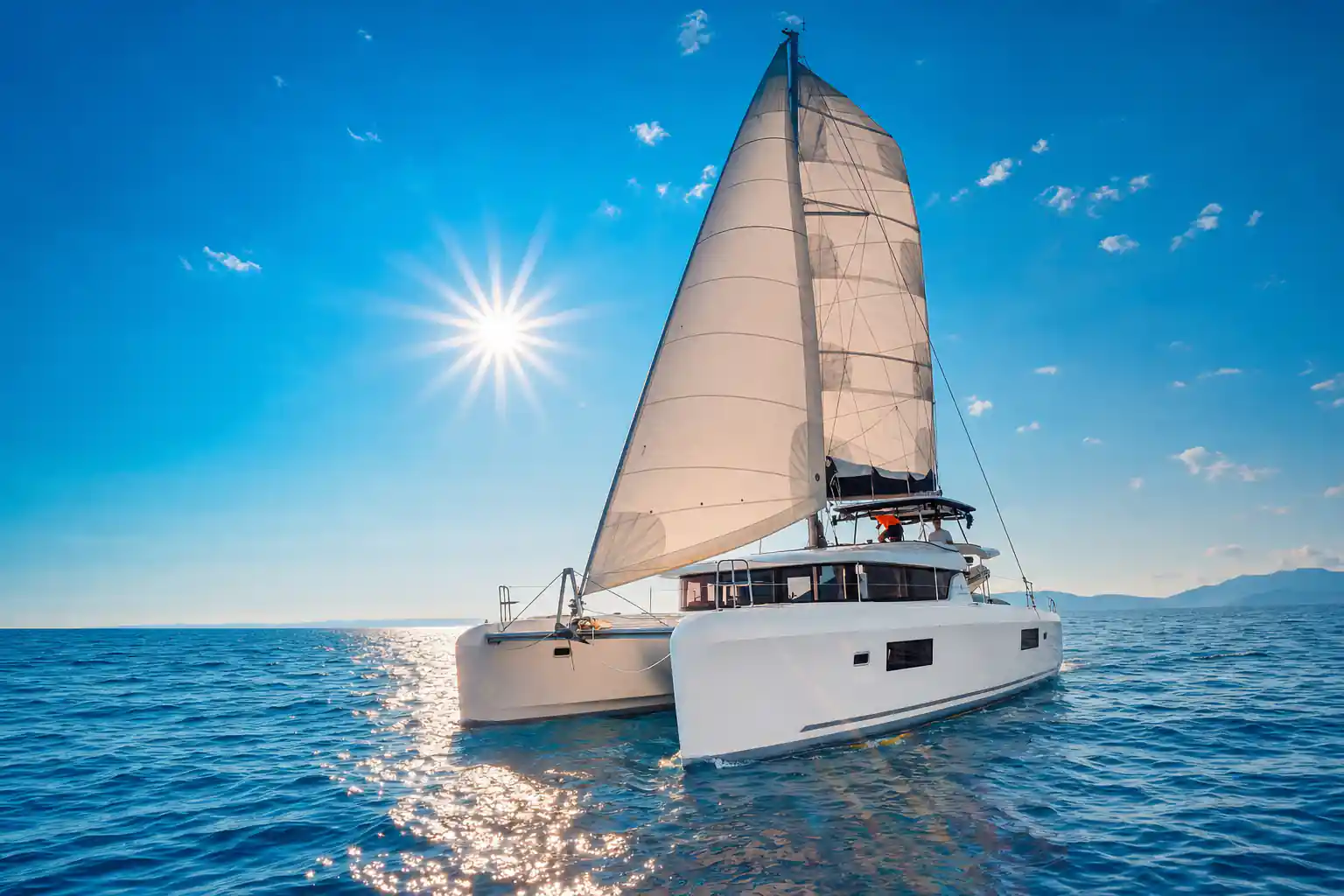
The catamaran under full sail in bright blue water off Funchal.
The search, which is most of the time
Most of the cruise is a slow, patient search. Crew members scan for spouts, splashes, and dark forms gliding just below the waterline. In Madeira, a land-based spotter often helps by relaying mileage and landmarks to skippers, which cuts down the guessing and gives guests more time with the animals.[8] Keep your eyes on the water and you will often spot the dolphins before anyone announces them.
When something is found, the catamaran slows and everyone moves to the rail. The live guide points out what you are looking at and explains the behaviour in Portuguese and English.[1] The atmosphere is shared, and the pace is gentle enough for children to enjoy. Patience is part of the deal, but the quiet stretches are a good time to feel the Atlantic breeze and watch the coast glide by.
Photography on a moving boat is easier if you use a fast shutter speed and keep your lens facing out. Phones work well too, especially when a dolphin rides the bow wave. Ask the crew where the animals usually surface; they know the local habits and are happy to share what to look for.
West to Cabo Girao and the pause
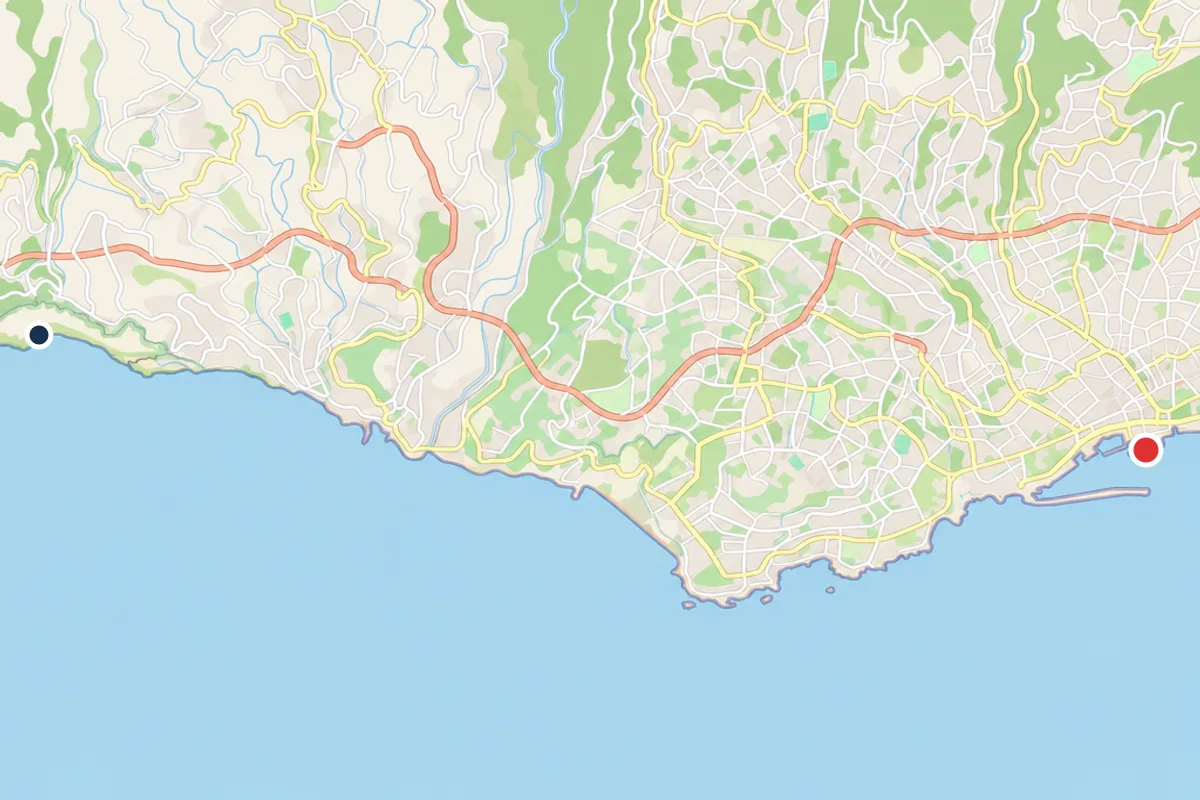
From the deeper water, the catamaran turns back toward land and follows the coast west. Cabo Girao comes into view ahead, its sea cliff rising 580 metres above the Atlantic.[3] The tour route lists Cabo Girao Cliff as one of its stops, so you get time to appreciate the scale of the cliffs from the water.[1] From below, the famous skywalk above looks small against the sheer rock.
There is also a 'secret stop' on the itinerary, a quieter moment away from the main traffic.[1] The crew uses this pause to let the boat drift, and it often becomes a highlight for photographers. Have your camera ready and listen for the crew's instructions, because the best part of this stretch is the way the light hits the cliff face.
At the base of Cabo Girão, the scale is hard to grasp. The layers of volcanic rock, the deep blue water and the tiny fields at the cliff top all come together in one view. The skipper keeps the boat at a safe distance, giving you a chance to see the full face of the cliff without straining your neck.
from US$46
A 3-hour luxury catamaran cruise in Funchal Bay with dolphin and whale watching, plus a live guide in Portuguese and English.[1]
The sail back along the bay
The return leg stays inside Funchal Bay, with the city climbing the hills behind the harbour. The route loops back from Cabo Girao Cliff to the marina, so the same coast looks different in reverse.[1] The water often calms as you approach the harbour, and the sense of being on holiday really settles in.
On the way home, the light softens and the shoreline changes character. You can pick out the old town, the cruise ship terminal and the green slopes above the city. The crew keeps the commentary in Portuguese and English while people find their spots on the nets or in the shaded cockpit.[1] This is the moment to relax, compare sightings and enjoy the last salty stretch.
Look back over your shoulder and the cliffs seem even higher from a distance. In the bay, sailing boats and fishing craft share the water, and the city looks entirely different from the land side. If you are lucky, a few dolphins may escort the boat toward the marina, which makes the final minutes feel like a small celebration.
How the time actually divides
It helps to think of the cruise in three broad chunks. First comes the departure from Funchal, when the deck fills and the crew explains the plan. Then comes the main search, which is the longest part of the trip. Finally the boat turns for home and the mood becomes more relaxed.
The whole experience lasts 3 hours, so there is time for all of it without feeling squeezed.[1] A morning departure often has a fresher feel, while an afternoon trip can have warmer light. Bring a layer for the breeze, keep your camera handy, and treat the quiet stretches as part of the experience rather than waiting time.
Comfort matters on any boat trip. Non-slip shoes are sensible, and a small daypack with water and a snack can make the time afloat easier. If you are at all worried about motion, sitting near the middle of the lower deck and focusing on the horizon tends to help. The crew is used to guests of all ages and will do what they can to make you comfortable.
Getting off and what comes next
Back at the marina, the crew helps everyone ashore and the trip ends exactly where it began. Funchal's seaside promenade, cafés and old town are within easy reach, so the day does not have to stop when the cruise does. The marina also has taxis and public transport if you need to get back to your hotel.
For plans tied to weather, the free cancellation policy protects you: full refunds apply with notice up to 24 hours.[1] And if you loved the time on the water, Madeira has plenty more boat trips, from smaller RIBs to sunset cruises. A slow walk through the old town afterwards is a natural way to end the afternoon.
Take a moment after disembarking to notice how the world feels different after hours at sea. The city smells of salt and coffee, the pace slows, and the memory of dolphins stays with you. Whether you saw a dorsal fin or simply enjoyed the cruise, a Funchal catamaran outing is a gentle way to meet the island from the water.
How travellers rate the cruise
GetYourGuide rating breakdown for the Funchal Bay Luxury Catamaran Cruise.[1]
Compare catamaran from-prices
When to see wildlife
How the cruise unfolds
Check in
Meet at the Funchal marina and use skip the ticket line to board quickly.[1]
Board
Settle onto the deck, the shaded cockpit or the trampoline nets as the crew prepares to leave.
Leave the marina
The catamaran motors out of the harbour and heads toward deeper water offshore.
Search
Scan the water for dolphins and whales while the live guide gives commentary in Portuguese and English.[1]
Cabo Girao
The route passes Cabo Girao Cliff, where the sea cliff rises 580 metres above the Atlantic.[3]
Return
The cruise loops back to Funchal after 3 hours on the water.[1]
Ready for dolphins on Funchal Bay?
from US$47Reserve now & pay later