The quick version
- Board the Funchal Bay catamaran without waiting at the ticket desk.[1]
- From US$46 for a 3-hour dolphin and whale watch cruise on a luxury catamaran.[1]
- A live guide speaks Portuguese and English throughout the trip.[1]
- No fee applies if you cancel with 24 hours' notice; a full refund is yours.[1]
- The cruise passes Cabo Girao Cliff and includes a secret stop.[1]
| Funchal Bay cruise | Ecological catamaran | All-inclusive luxury | |
|---|---|---|---|
| From | from US$46[1] | from US$40[2] | from US$91[3] |
| Duration | 3 hours[1] | 2.5 - 3 hours[2] | 3 hours[3] |
| Rating | 4.25[1] | 4.55[2] | 4.92[3] |
| Live guide | Portuguese, English[1] | English, Portuguese[2] | English, Portuguese, Spanish[3] |
| Extras | Skip-the-line[1] | Wheelchair accessible[2] | All-inclusive[3] |
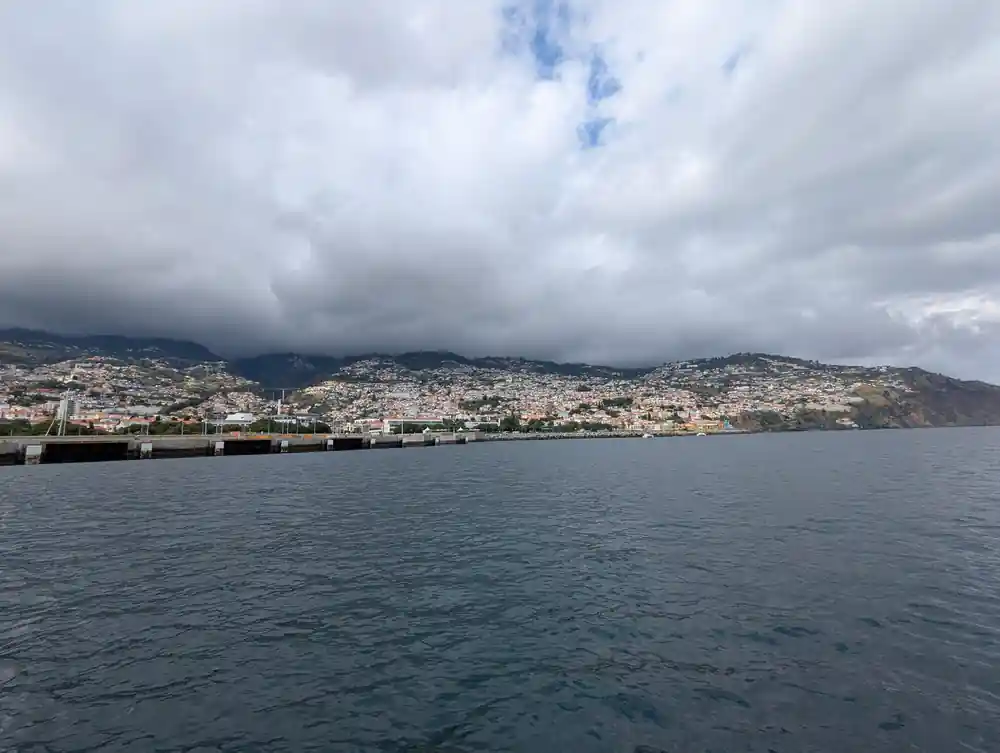
At 580 metres high, Cabo Girão is the highest promontory in Europe, but this is not the only reason it has become increasingly famous all over the world.
A comfortable, well-priced way to watch for dolphins
Pre-booking checklist
Why catamaran dolphin Funchal cruises work so well
Madeira's south coast drops quickly into deep water. Only five kilometres from land, the sea floor descends beyond 3,000 metres; this steep underwater landscape lets deep-water whales come near the coast.[4] A catamaran dolphin Funchal cruise works well in this setting: you are scanning a relatively narrow band of ocean where big animals regularly surface. The catamaran's wide twin hulls keep the deck steady, so you can hold binoculars, help children spot fins, and enjoy the ride even when the Atlantic swell picks up. For first-timers, the steady deck is the difference between a memorable trip and a queasy one.
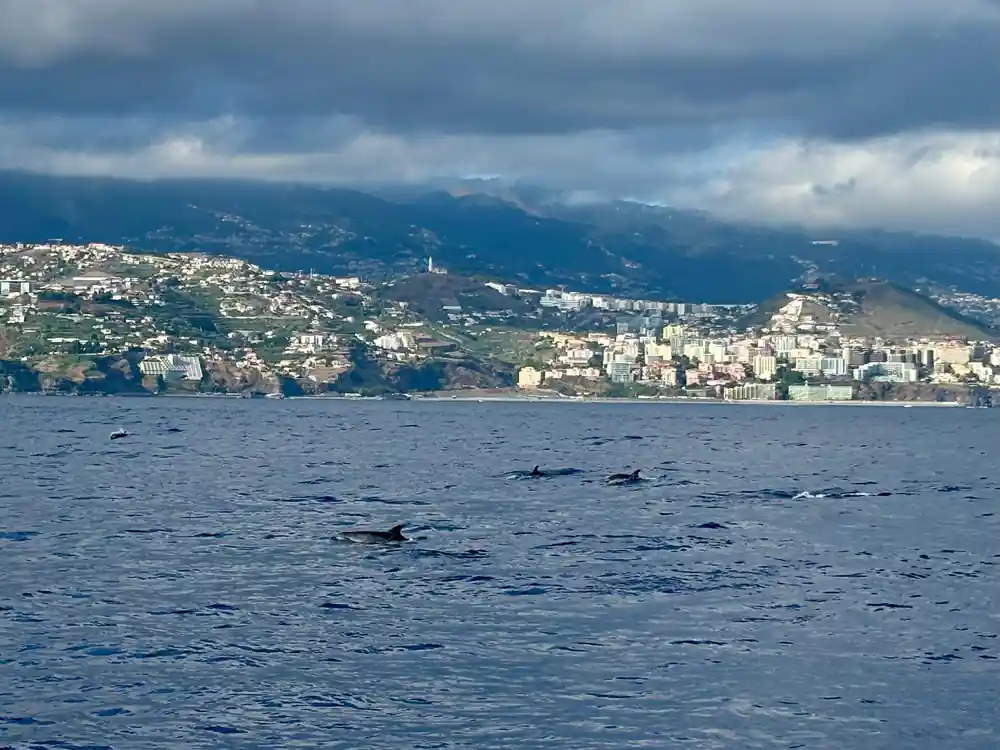
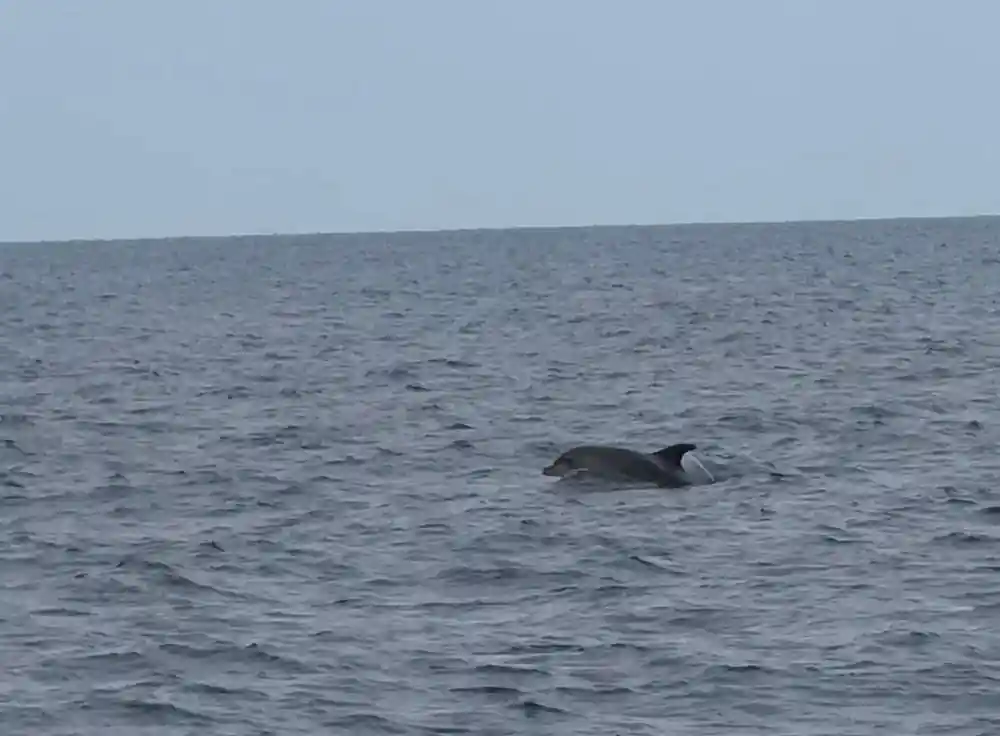
Madeira's waters hold 27 cetacean species, nearly a third of all known species worldwide, researchers say.[5] In practice, your most likely encounters are with bottlenose dolphins and short-finned pilot whales, visible year-round; Atlantic spotted dolphins and occasional blue whales show up seasonally.[5] Orcas and humpback whales are rare, so treat them as a thrilling bonus. The variety is part of the appeal, and every trip has its own rhythm.
Some operators use a spotter on land who sends details like mileage and landmarks to the skipper, guiding the boat directly to the action.[6] That quiet teamwork happens behind the scenes, but it makes a real difference to your chances of a sighting and shows how seriously Madeira's whale watching community takes its work.
What you will see off Madeira
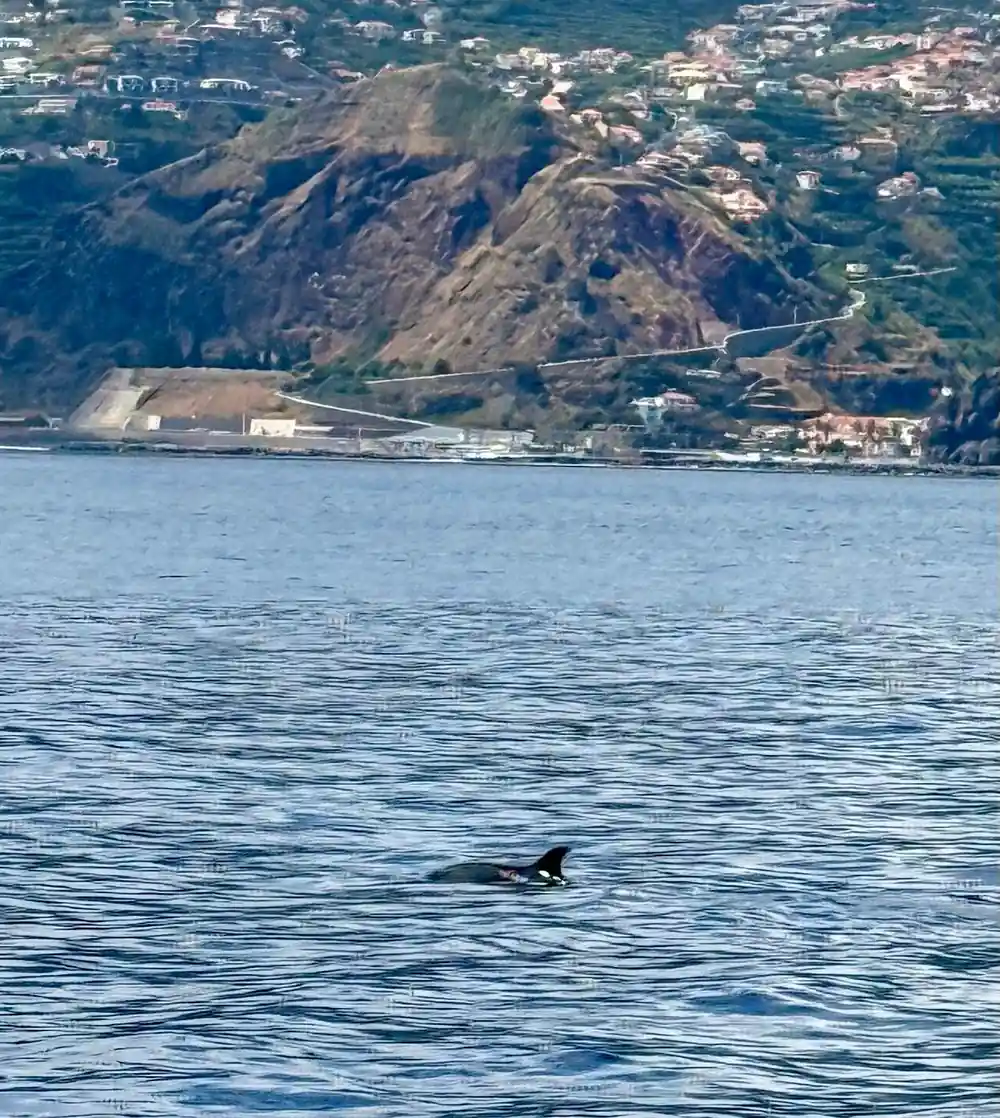
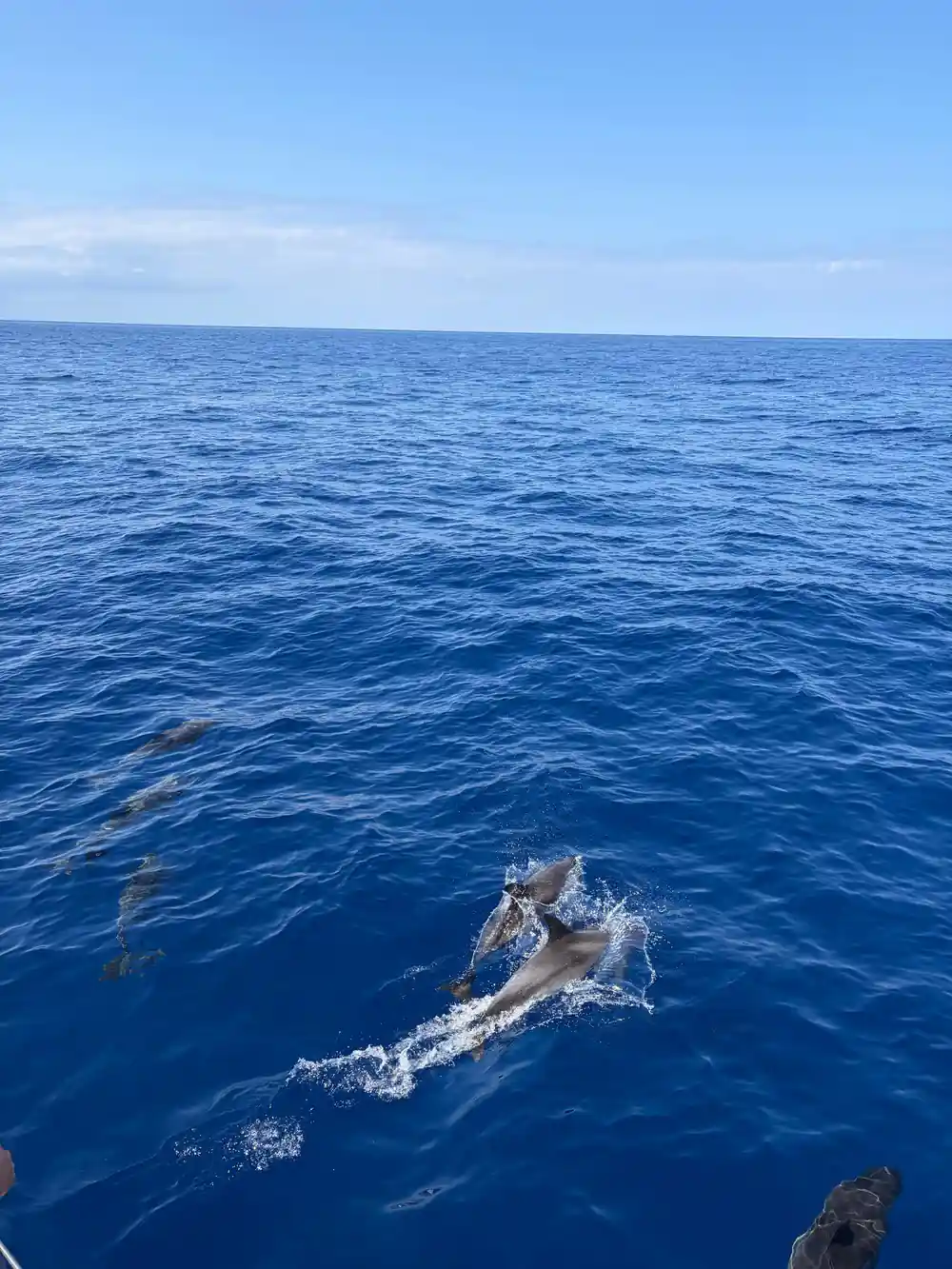
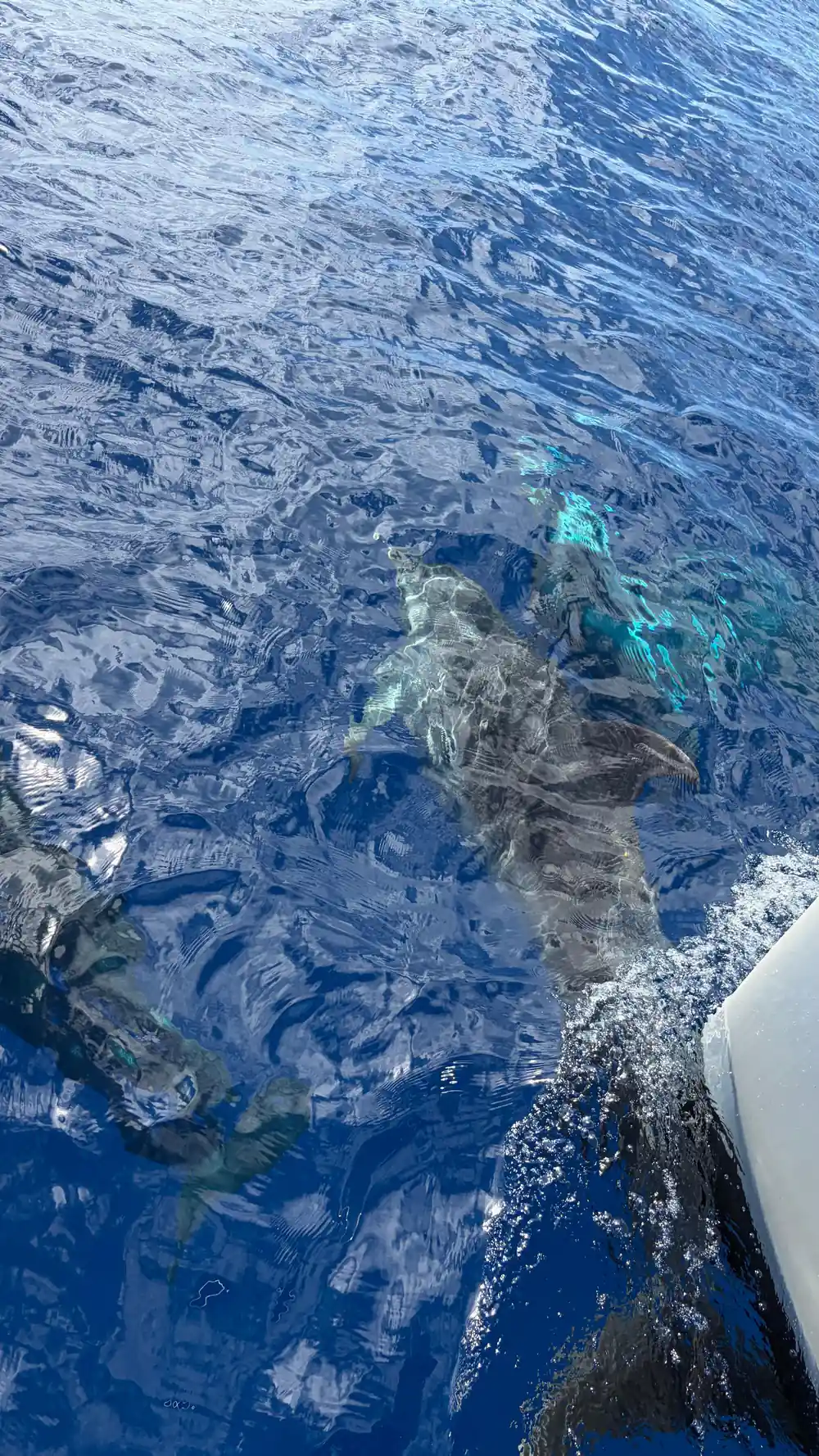
Bottlenose dolphins are the most reliable companions on trips from Funchal. They often ride the bow wave, and their acrobatics are a joy to watch. Short-finned pilot whales travel in tight family groups, and they are frequently spotted at the surface, which makes them easier to find than many other whale species.[5] The crew's live commentary in Portuguese and English points out landmarks and anything moving in the water, so you always know where to look.[1]
Sea temperatures off Madeira range from around 18°C in winter to 24°C in summer, so even outside the warmest months the ocean is inviting.[7] The Funchal Bay catamaran route includes Cabo Girao Cliff, a 580-metre-high sea cliff that is one of the most dramatic sights on the island.[1][8] Photographers will want a wide lens for the cliff and a longer lens for the dolphins; both are worth carrying on a trip like this. The deep water continues right up to the island, so the best wildlife viewing is often surprisingly close to port.
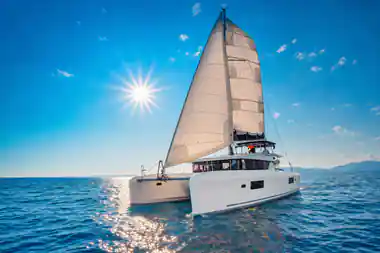
A catamaran glides past Madeira's towering south coast cliffs.
Inside the Funchal Bay cruise
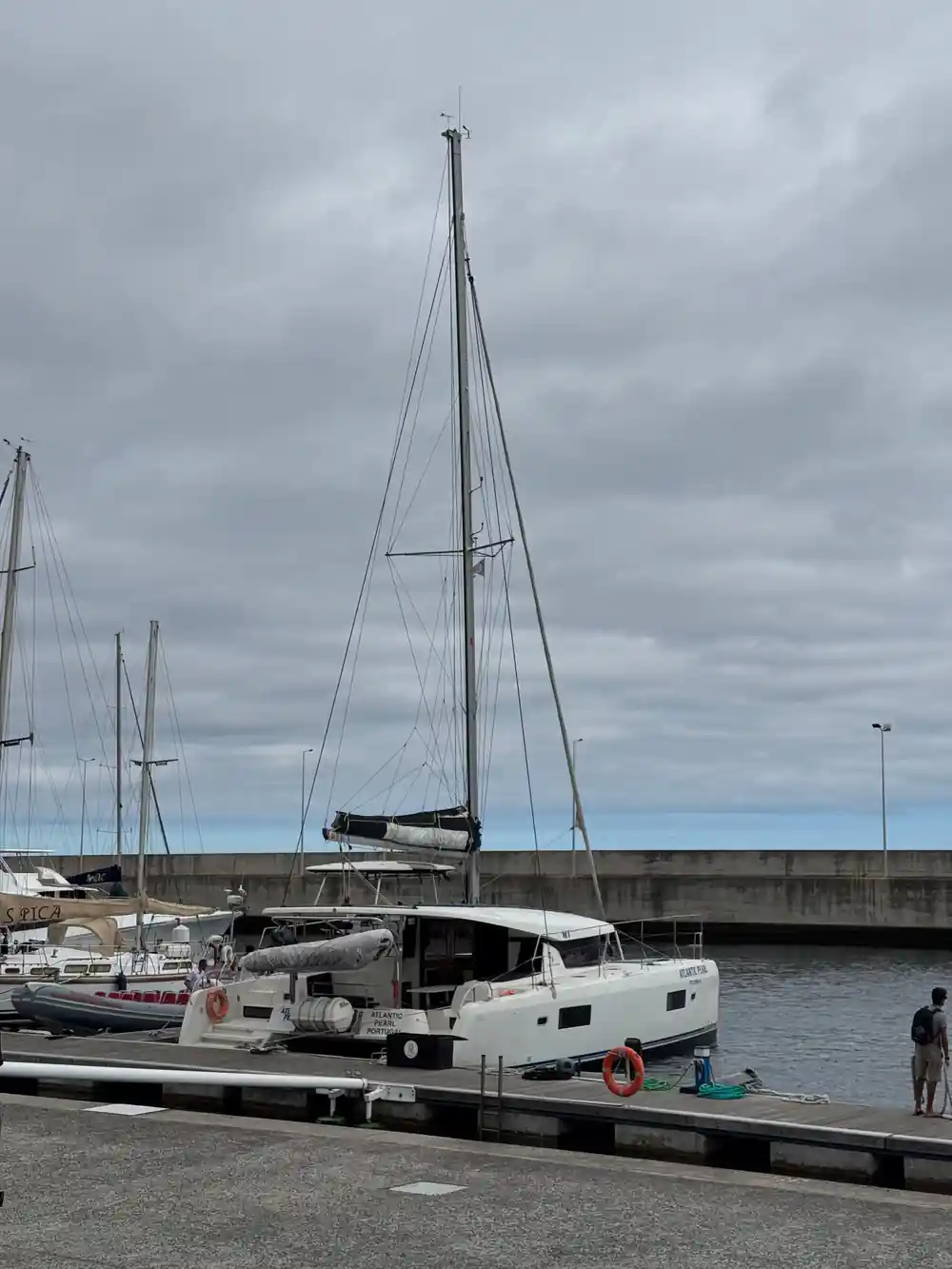
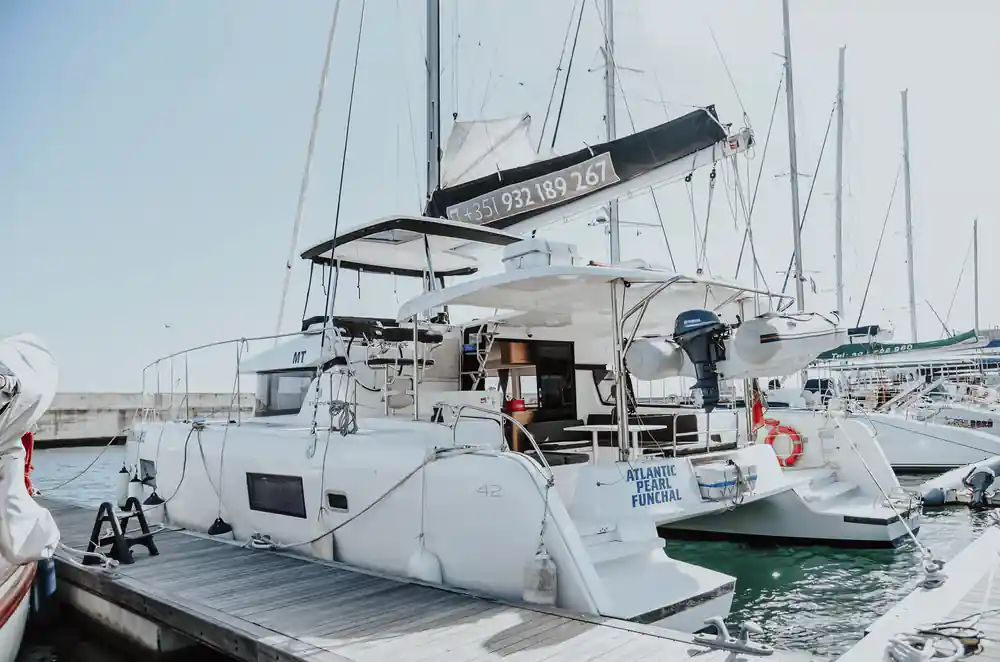
The Funchal Bay: Dolphin & Whale Watch Luxury Catamaran Cruise is a 3-hour trip priced from US$46.[1] It includes skip-the-line access, which means you can board quickly and find a good spot on deck instead of waiting at the ticket desk.[1] The route takes in Cabo Girao Cliff and a secret stop, so there is a sense of discovery built into the itinerary.[1] If you are new to whale watching, the structure of the trip makes it easy.
On board, a live tour guide gives commentary in Portuguese and English, sharing what the crew sees and what to expect next.[1] The atmosphere is relaxed rather than rushed, and the catamaran's size means there is room to move around. Reserve your spot now with pay-later options, and if plans shift, free cancellation up to 24 hours in advance provides a full refund.[1]
The secret stop is one of those details that gives the trip personality. It might be a quiet cove, a rocky islet, or a stretch of coast where the crew knows dolphins like to feed. Let yourself be surprised, and keep your camera ready.
Which boat should you choose?
Choosing the right boat matters. Catamarans offer the most stable platform, making them a favourite for families and anyone prone to seasickness. RIBs are faster and more thrilling, but they are smaller and wetter. Traditional wooden boats have a classic charm, and some eco catamarans go further: the Magic Dolphin runs on electric engines for silent, emission-free cruising when sea life arrives.[9] It is worth deciding what you value most before you book.
For a guided catamaran dolphin Funchal experience with a strong balance of comfort and value, the Funchal Bay cruise is hard to beat. Travellers rate it 4.25 from 3,470 reviews, with Guide 4.3, Transportation 4.5, and Value for money 4.2.[1] Its listing names skip-the-line access and a live guide.[1] It is a great pick when you want a guided trip without the wind and spray of a speedboat.
from US$46
Funchal Bay Dolphin & Whale Watch Luxury Catamaran Cruise, rated 4.25 out of 3,470 reviews mention free cancellation up to 24 hours in advance.[1]
When to go and what to pack
Madeira's mild climate means you can join a catamaran cruise in most months. Sea temperatures range from around 18°C in winter to 24°C in summer, so the air stays fresh even when the sun is strong.[7] Pack sunglasses, sunscreen, a windproof jacket, and a light jumper for the return leg. If you are prone to seasickness, choose a morning departure when the sea is usually calmer, and eat a light meal beforehand.
The 3-hour cruise gives you a solid window for sightings without taking over your whole day.[1] Arrive a little early to find your sea legs and settle in. A good pair of binoculars helps, but the crew and guide will also point you in the right direction. Keep your phone in a waterproof pouch, and bring a dry bag for anything you want to keep safe. A hat with a strap is also a good idea on breezy days.
Layering is the key to Madeira. A light long-sleeved shirt, a fleece, and a waterproof shell will cover everything from a warm afternoon to a breezy evening. Leave valuables in your hotel safe and bring only what you need on deck.
How the day unfolds
Your trip begins with quick boarding thanks to skip-the-line access, and soon the catamaran is heading towards Cabo Girao Cliff.[1] Along the way there is a secret stop, which adds a little spontaneity to the route.[1] The guide's commentary in Portuguese and English keeps everyone engaged, and the crew scans constantly for the first sign of a fin or a blow.[1]
When dolphins or whales are found, the boat lingers so you can watch rather than chase. The stable deck makes it easy to use binoculars or compose a photograph, and the catamaran's size means you are not all crowded on one side. Every trip is different, and that unpredictability is exactly what brings people back to Madeira's waters again and again. The crew keeps the engines quiet when animals are near, which helps both your photos and the animals' comfort.
As the catamaran turns back towards Funchal, the mood on board is usually relaxed and happy. People compare photos, spot seabirds, and watch the city lights come on. It is a gentle way to end an afternoon on the Atlantic.
Booking tips and cancellation peace of mind
Booking is simple: you can reserve now and pay later, which is helpful if your Madeira itinerary is still taking shape.[1] Cancelling up to 24 hours in advance is free, letting you secure a spot and adjust later without financial loss.[1] This flexibility is especially valuable for cruise passengers, who may not know exactly when they will be in port.
The tour costs from US$46, and the 3-hour duration fits neatly into a morning or afternoon.[1] When comparing boat trips, remember that prices are from-prices and availability varies with the season. Madeira's resident dolphins and pilot whales give you a strong chance of a memorable encounter, and the island's deep offshore waters make it one of the best places in the Atlantic to try.[4] If the morning is grey, don't cancel; the weather can change quickly off Madeira.
How travellers rate Funchal catamaran cruises
Compare starting prices
From-prices in USD for[1],[2],[3],[13]. Child rates not stated.
Best times to book
How to book your cruise
Choose your date
Pick a morning or afternoon departure that suits your Madeira plans.
Reserve now, pay later
Secure your place online and pay when you are ready.
Skip the line
Use your skip-the-line access to board quickly at the marina.
Find a spot on deck
Settle in, listen to the live guide, and watch the coastline unfold.
Scan for dolphins
Keep your eyes on the water and enjoy the secret stop and Cabo Girao Cliff.
Ready to meet Madeira's dolphins from the water?
from US$47Reserve now & pay later