The quick version
- The route has a 'secret stop' plus Cabo Girao Cliff; the swim break is usually the sheltered spot chosen by the skipper.[1]
- The Atlantic off Funchal ranges from around 18°C in winter to 24°C in summer, so expect a cool, refreshing dip.[2]
- Pack a mask, snorkel, fins, towel and reef-safe sunscreen; the listing does not mention gear is included, so ask when booking.
- The whole cruise lasts 3 hours; the swim stop is part of that and exact minutes are not published.[1]
- You can stay by the boat and ask for a buoyancy aid; nobody has to swim far from the ladder.
- Top choice Luxury Catamaran from US$46 Rating4.25[1]Duration3 hours[1]Live guidePortuguese, English[1] Check availability
- All Inclusive from US$91 Rating4.92[3]Duration3 hours[3]Live guideEnglish, Portuguese, Spanish[3] See this tour
- Responsible Tour from US$62 Rating4.92[4]Duration2 hours[4]Live guideEnglish[4] See this tour
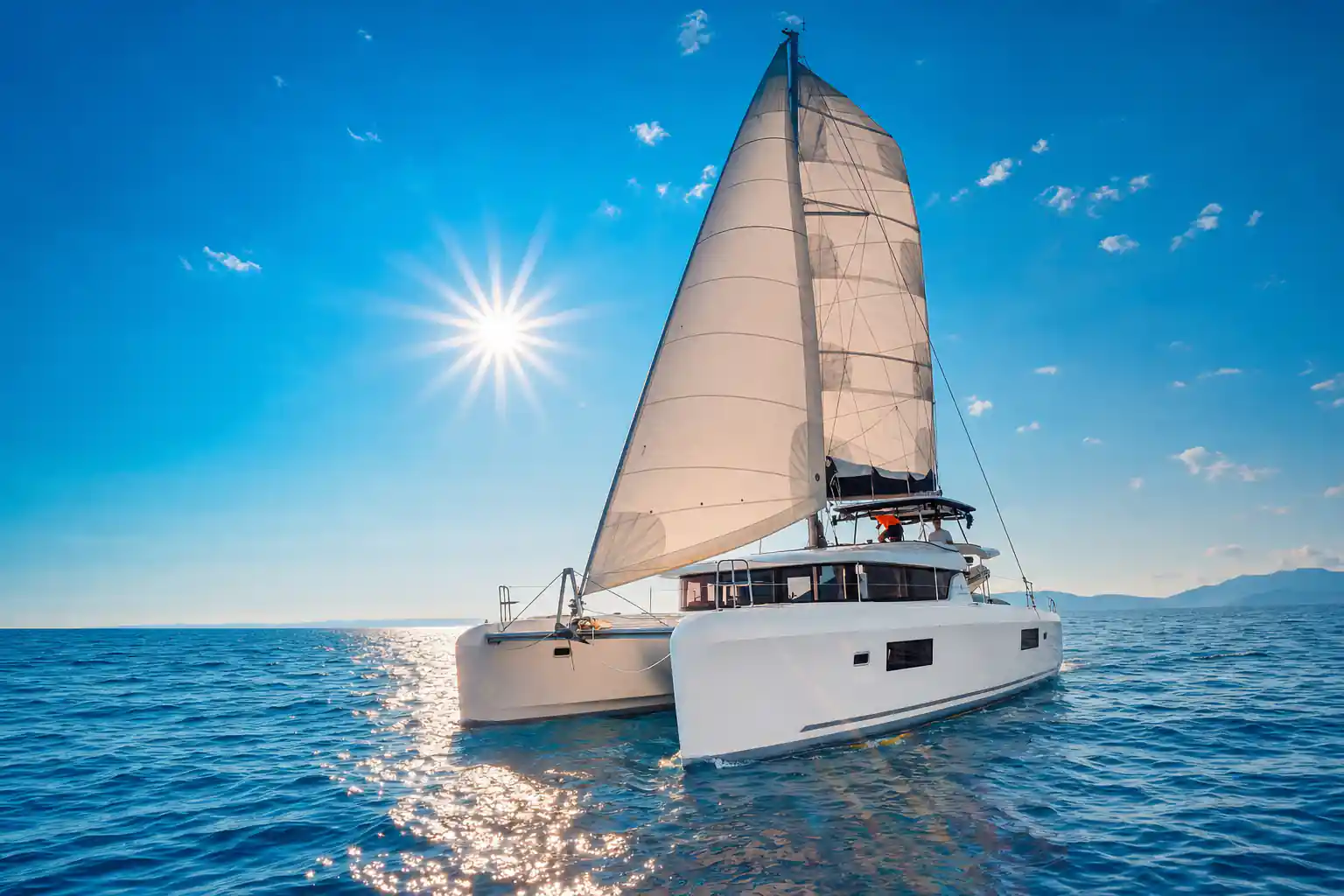
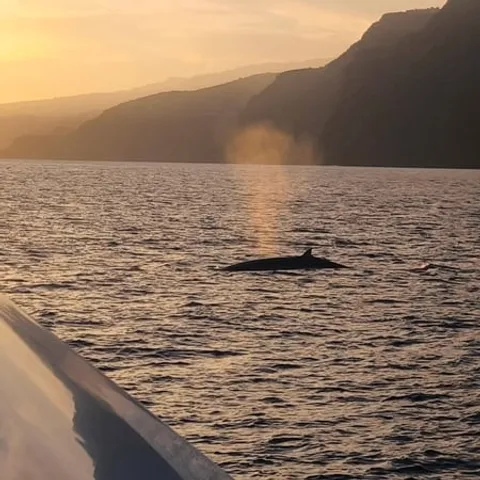
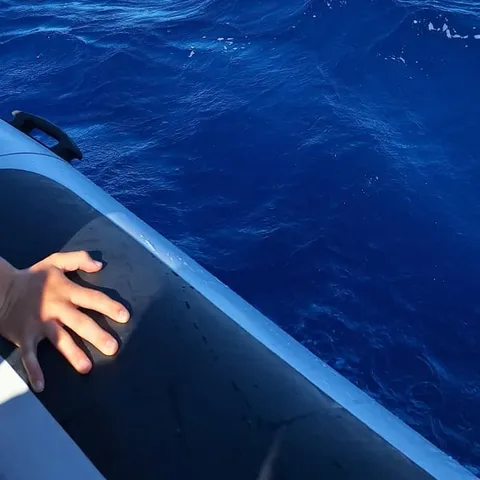
Sea temperatures remain pleasant, ranging from around 18°C in winter to 24°C in summer, allowing activities such as swimming and diving almost year-round.
A refreshing bonus, not a standalone snorkel trip
For the swim stop
- Reef-safe sunscreen and rash vest
- Mask, snorkel and fins if you have them
- Leave a dry towel and clothes ready
- Tell the crew if you are not a strong swimmer
Booking and deck
- Reserve now, pay later
- Free cancellation window
- From-price shown on tour page
- Ask about boarding access when booking
Where the boat actually stops
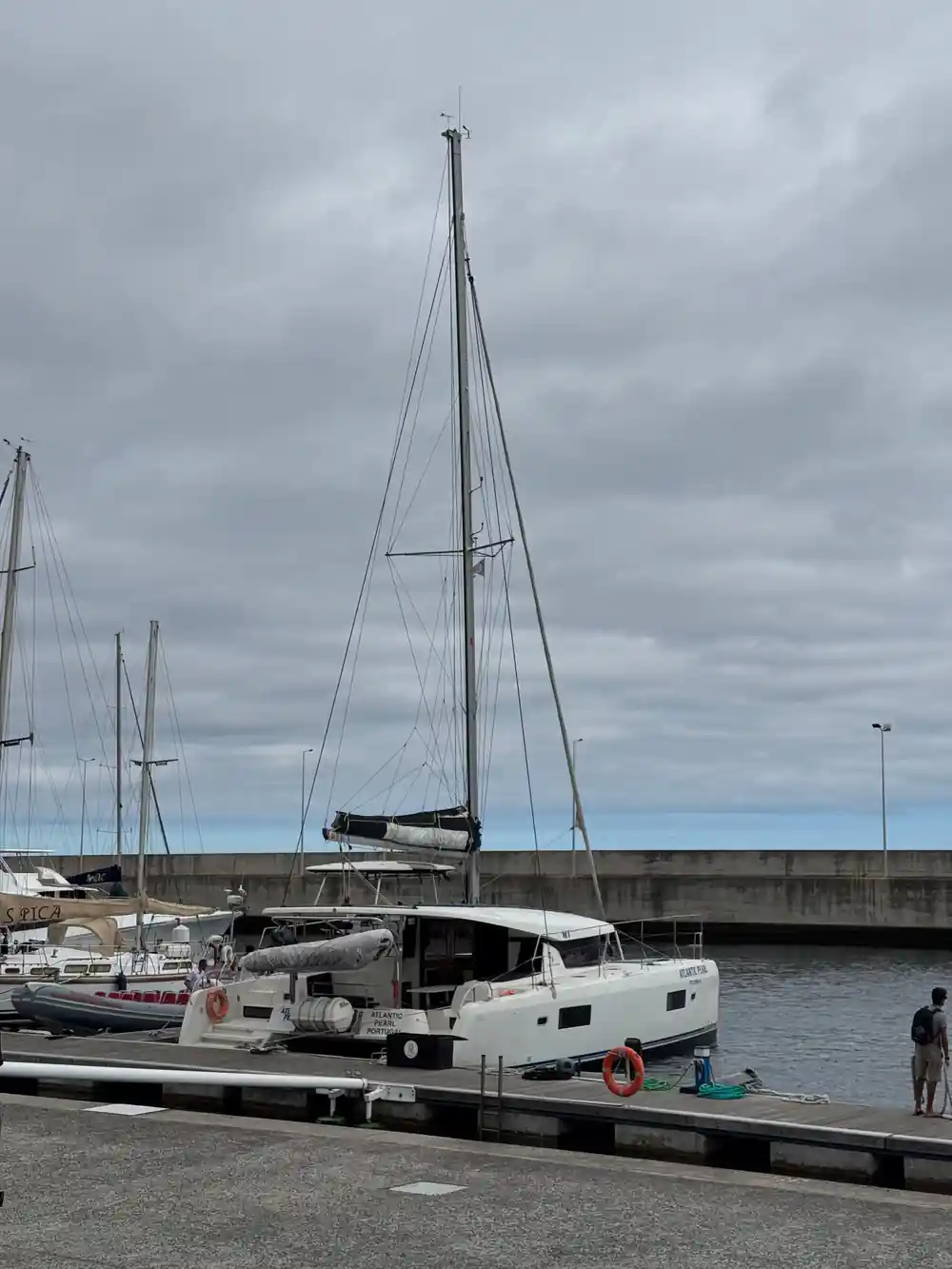
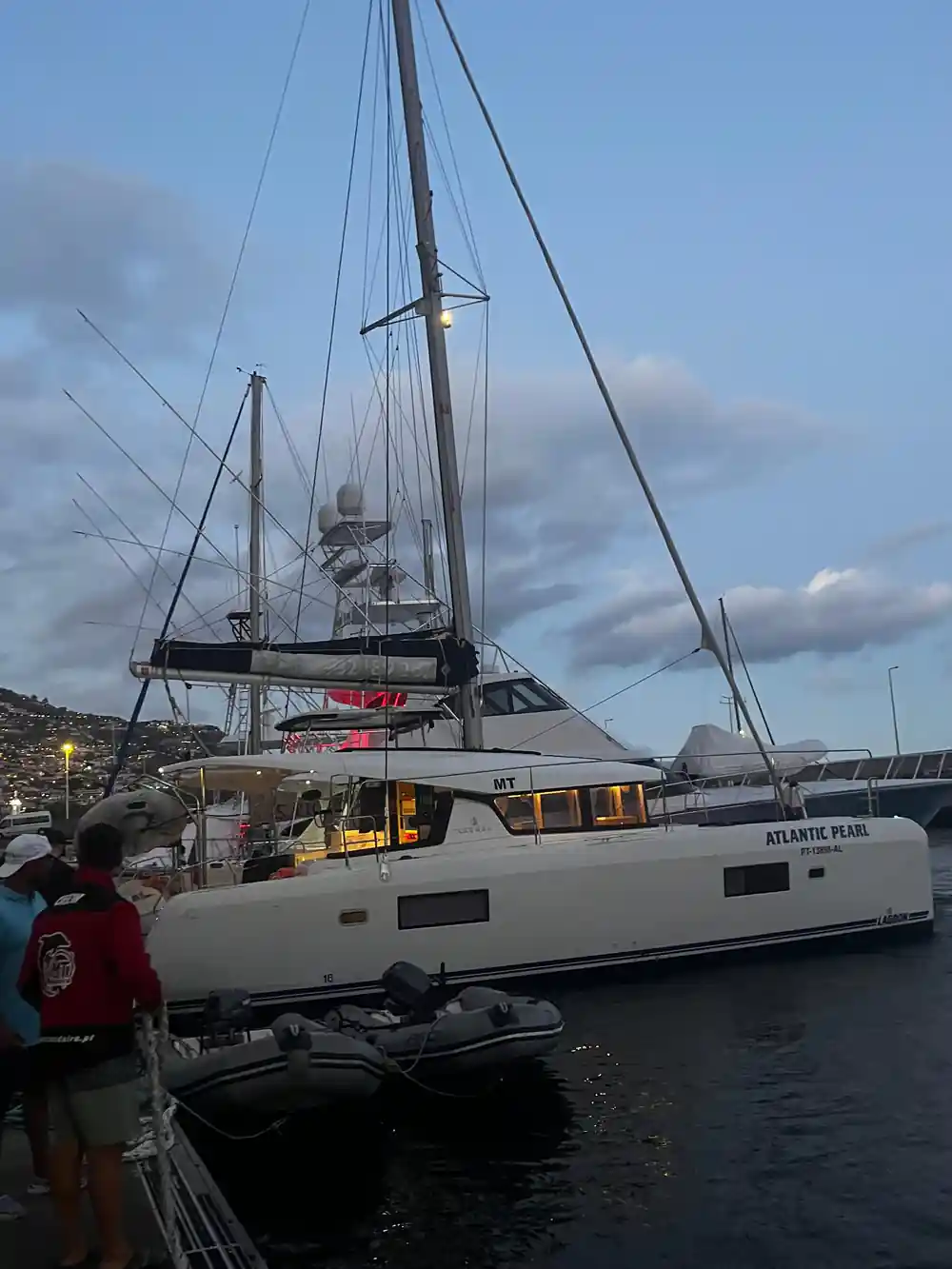
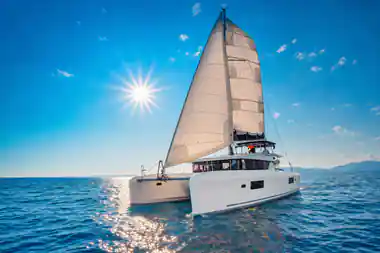
The Funchal Bay luxury catamaran cruise makes two watery stops along its route: a stop the listing calls 'secret stop' and a sail past Cabo Girao Cliff.[1] The swim break is the secret stop, usually a sheltered spot just off Funchal's green coastline. You will not find its name on any map, and the crew tends to keep it that way. That little mystery is part of the charm. If you are the sort of traveller who likes to know every detail, ask at the dock; the crew are usually happy to describe the plan.
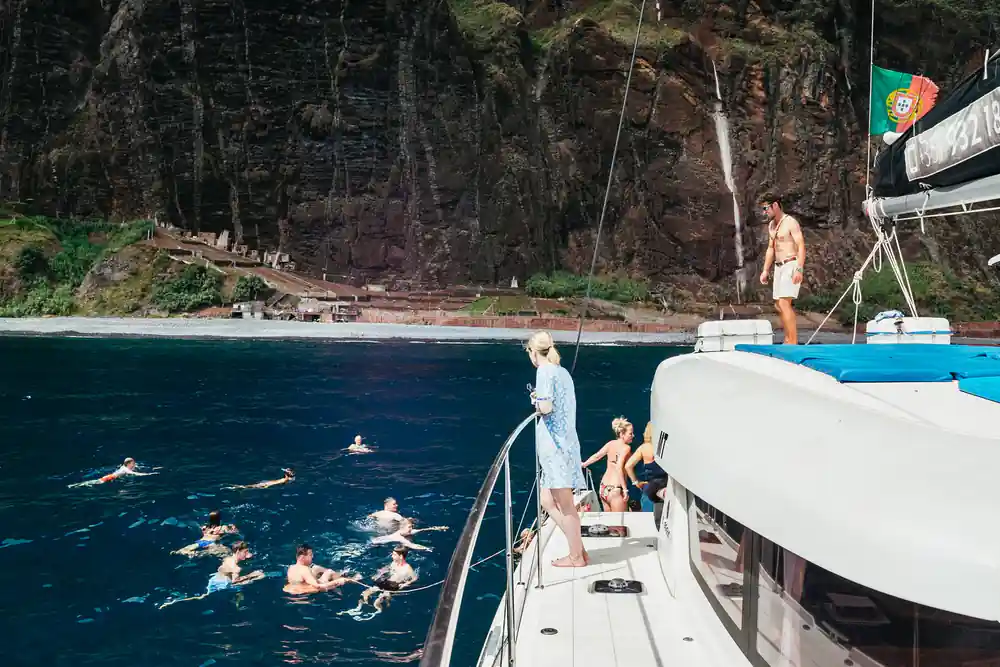
Do not expect a permanent buoy or a marked swimming area. The skipper reads the wind and tide each morning and picks a cove where the anchor holds and the water is calm. The stops list shows catamaran, secret stop, catamaran, Cabo Girao Cliff, catamaran, which tells you that the swim comes early, before the cliff views.[1] In practice, the boat edges into a bay below the cliffs and lowers the ladder for a dip.
Some departures share the exact spot with other catamaran tours, while others find an empty corner. Either way, you get the same broad experience: a catamaran, a ladder, and the Atlantic inviting you in.
How deep, and can you stand up
There is no published depth for the swim stop, so the honest answer is that it varies. In a typical Funchal Bay cove, the seabed shelves gradually from the rocks, and you may be able to stand near the shore in calm conditions. Further out, the bottom drops away into open water, which is exactly why the boat picks these bays for whales and dolphins nearby. Even if you cannot stand, floating with a buoyancy aid is easy here, and the boat remains the safest reference point.
Your best move is to ask the crew before you jump. They know the day's tide and can tell you whether the ladder is over sand, pebbles or a deeper patch. If standing matters to you, say so, and they may angle the boat closer to a shallow spot.
Remember that this is not a beach with a marked swimming area. You are responsible for your own footing in the water, so stay within your depth and keep one eye on the boat's position.
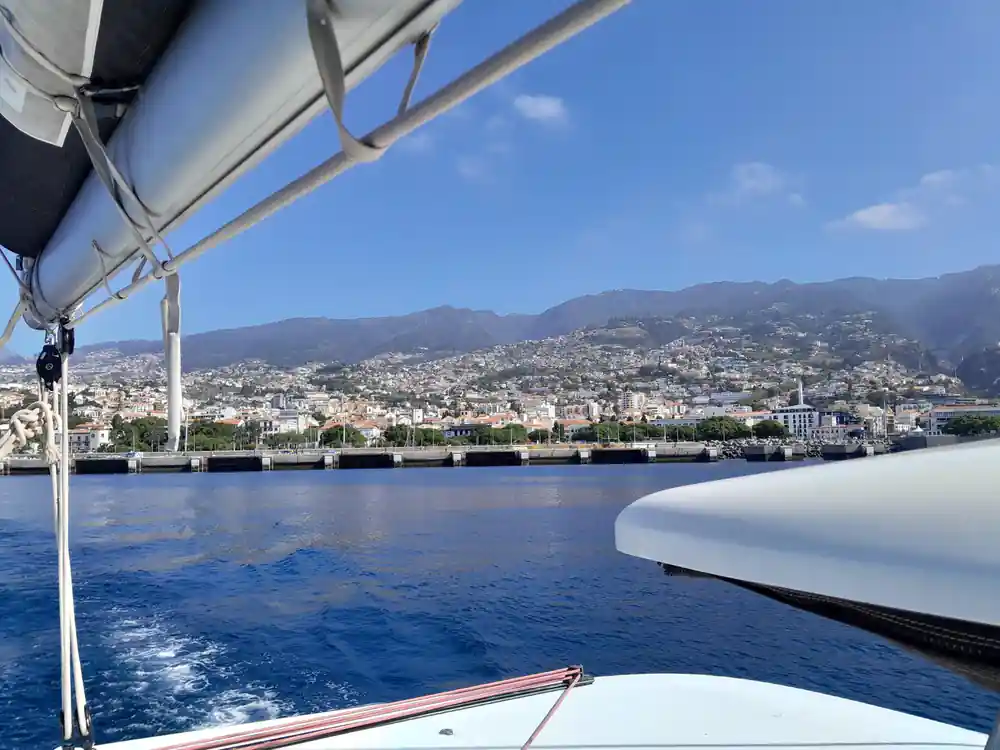
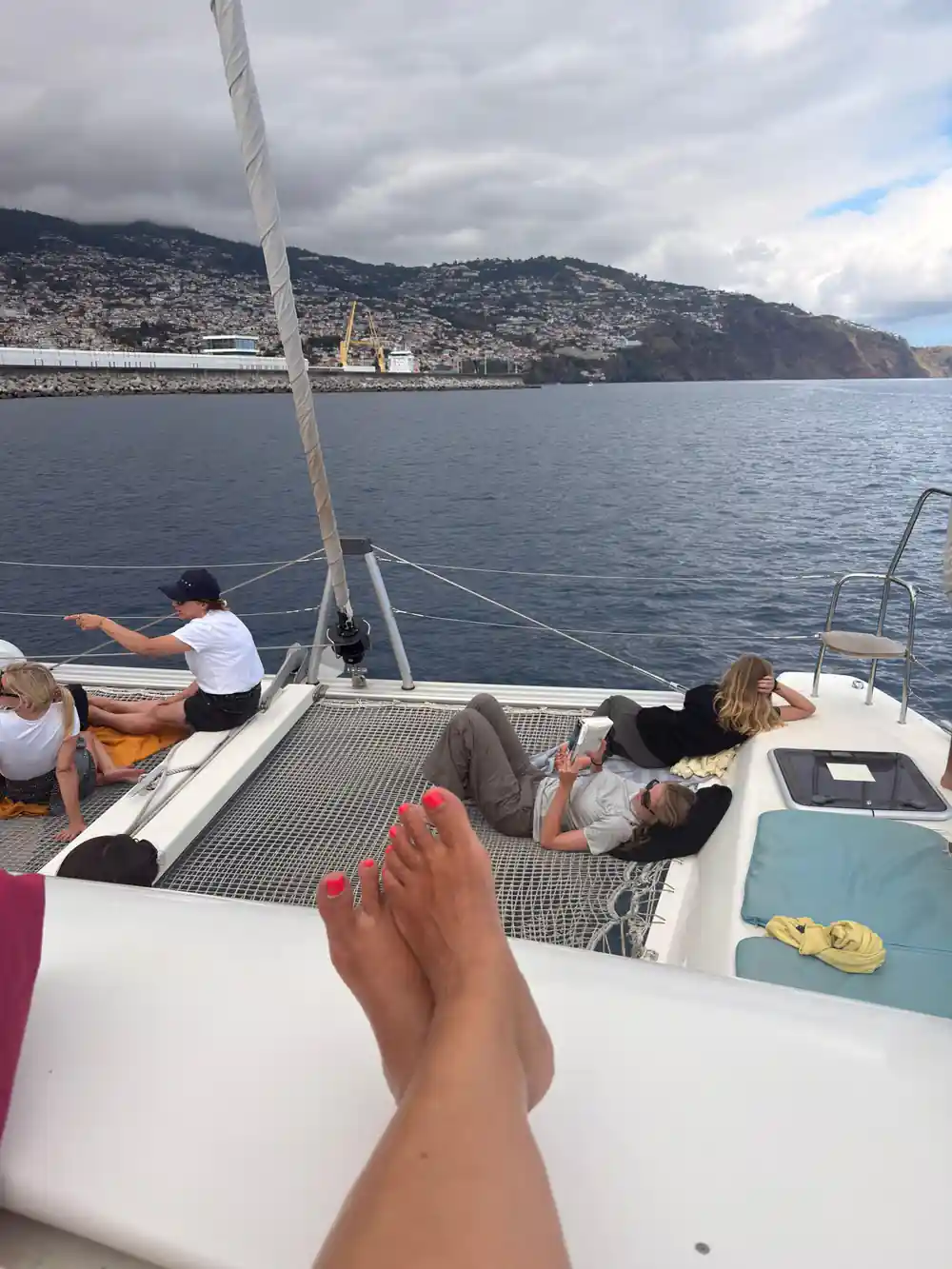
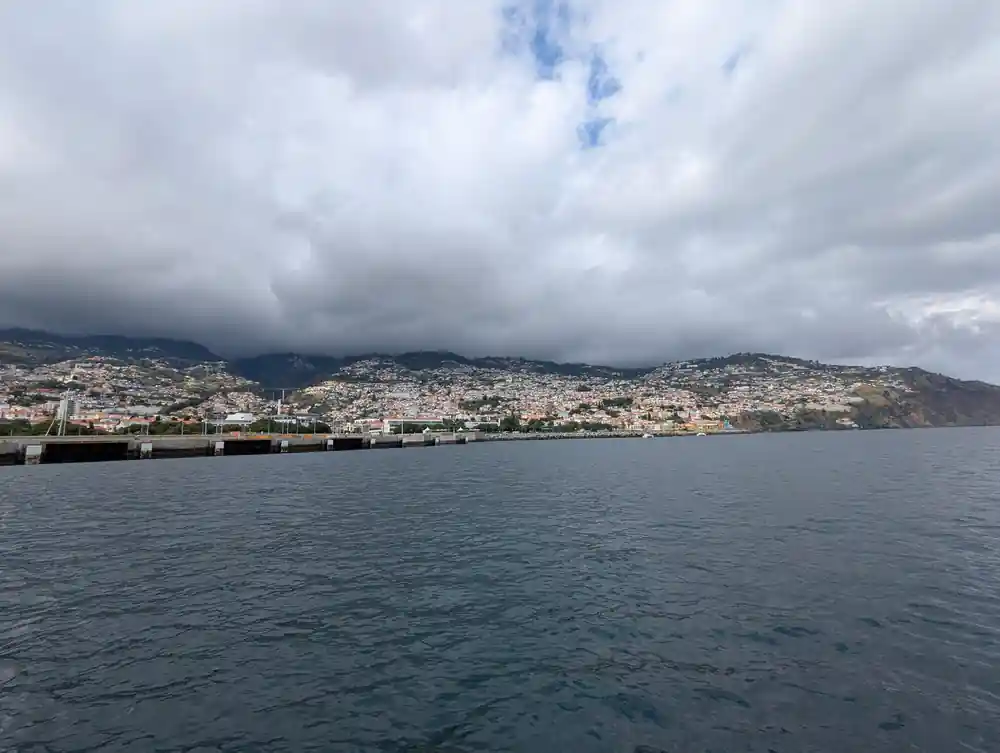
The swim stop usually happens in a sheltered bay below Funchal's green cliffs, with the catamaran at anchor.
How cold the Atlantic is here
The sea off Funchal varies little: winter readings are about 18°C and summer readings about 24°C.[2] That puts the water in the 'refreshing' category all year. In summer, a dip feels pleasant; in winter, it is a brisk swim that takes your breath away for a second. It is worth remembering that wind and sun affect how the water feels; a bright sunny afternoon can feel much warmer than a cloudy one.
A thin rash vest or shorty wetsuit takes the edge off, especially in the cooler months. The crew are used to passengers hesitating at the ladder, and they will not pressure you. Bring a warm towel and a dry layer for after the swim.
If you are booking specifically for snorkeling Funchal, check the season. The water warms through summer, but the wildlife calendar is a separate thing; dolphins and whales are seen all year round.[5]
What you see, and what to bring for it
The snorkeling here is less about coral and more about clear, open water and the life that gathers around rocky coastlines. You may see small fish, sea urchins and the occasional shoal moving past the anchor. Even a simple mask lets you see the texture of the seabed, and the light at midday is best. On board, you have a better chance of seeing wildlife: 27 cetacean species have been confirmed in Madeira's waters.[5]
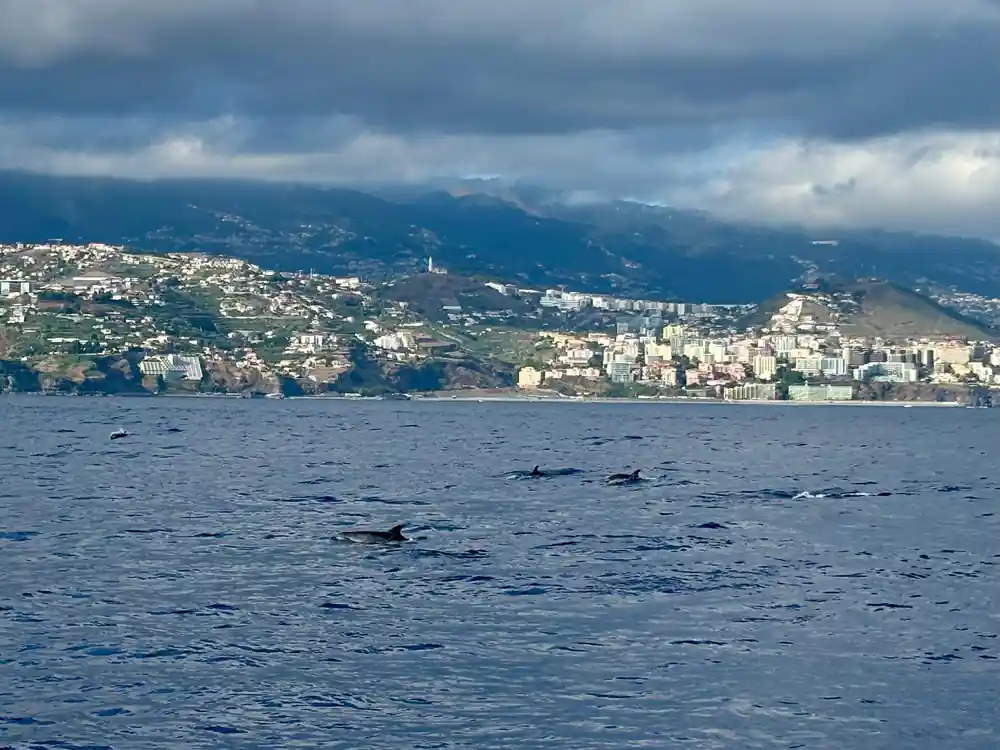
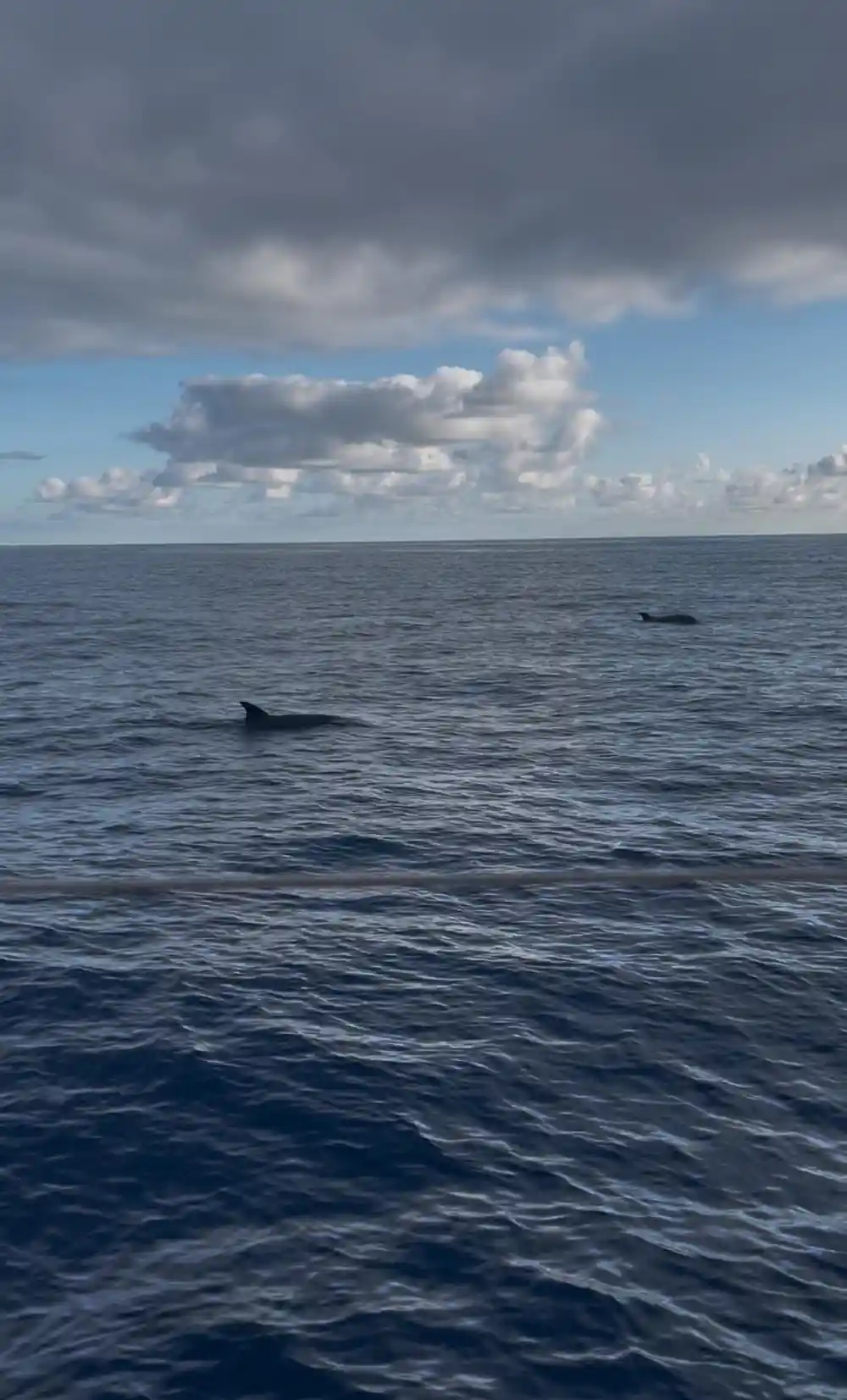
Short-finned pilot whales and bottlenose dolphins are around all year; occasional blue whales and Atlantic spotted dolphins show up seasonally.[5] The crew keep watch while you swim, and it is not unusual for a curious dolphin to surface a short distance away. You will not miss a sighting just because you are in the water.
For the water, bring a mask, snorkel and fins if you have them. A towel, reef-safe sunscreen, a hat for after the swim and a waterproof pouch for your phone complete the kit. The tour listing does not mention snorkel gear being included, so ask when you book if you want to travel light.
from US$46
The Funchal Bay luxury catamaran cruise with the swim stop, live guide and 3-hour route starts at this price.[1]
How long you get
The cruise lasts 3 hours from start to finish.[1] That time is shared between the swim stop, whale watching and the sail along Cabo Girao Cliff. The listing does not publish how many minutes the anchor is down, so treat the swim as one act in the wider outing rather than the headline. There is no need to rush your turn; the ladder is the only way in and out, and the crew keep a relaxed pace.
In practice, the crew allow enough time for everyone to leave the boat, swim a short loop and climb back up without rushing. If you hesitate at the ladder, you will lose part of your window. Jump in when the captain gives the word, and you will probably get more time than someone who waits to be coaxed.
After the swim, the boat continues to Cabo Girao Cliff, a sea cliff 580 metres high.[6] From the water, the scale is dramatic, and it gives you something to photograph while you dry off.
If you are not a confident swimmer
You do not need to be a strong swimmer to enjoy the stop, but you should be comfortable in open water. The catamaran has a ladder, the crew stay close, and you can keep within a few strokes of the hull. If you want a buoyancy aid, ask for one before you get in; it is a respectful request. Many first-time catamaran passengers are surprised by how stable the platform is; at anchor, it barely moves.
There is no need to prove anything. Swim two strokes out, float on your back, then climb back aboard. The shaded cockpit is still part of the experience, and you can watch everyone else splashing from a cushioned seat.
The Atlantic is not a pool, and conditions can change quickly. Listen to the safety briefing, stay clear of the propellers and follow the crew's call to return. The tour is rated 4.25 from 3,470 reviews, and the balance between wildlife and swimming is a big part of its appeal.[1]
Why here and not somewhere closer
Funchal Bay might seem like an unlikely place for deep-water wildlife, but the geography explains it. Only 5 kilometres from shore, the sea is over 3,000 metres deep, and steep underwater terrain lets larger cetaceans swim close to the coast.[7] That means a catamaran can leave the marina, find whales or dolphins and then pull into a sheltered cove for a swim, all in the same outing. Do not be surprised if the crew point out birds or fish on the way back; every trip is different.
The same trip then sails past Cabo Girao Cliff, a 580-metre sea cliff that towers over the south coast.[6] You get a cliff view, a wildlife search and a swim break without moving the boat to a different island. Dedicated snorkeling tours exist, but they take you to shallower reserves; this one gives you the best of both worlds.
If you have limited time in Funchal, the 3-hour cruise is an efficient way to see the coast from the water.[1] The secret stop may not have a name, but it has the right ingredients: calm water, green cliffs and the chance to say you swam in the Atlantic off Madeira.
Traveller ratings compared
Ratings from GetYourGuide: Funchal Bay Luxury[1], All Inclusive[3], Responsible[4].
Catamaran from-prices compared
Adult from-prices; child pricing not listed. Sources:[1],[3],[4].
Booking and planning
How to plan your swim stop
Bring your own gear
The listing does not say snorkel equipment is included, so pack a mask, snorkel and fins to be sure you can get in the water.
Ask about the spot
On boarding, ask the crew where the secret stop will be and whether you can stand there. They know the day's conditions.
Stay close
If you are not a confident swimmer, stay within a few strokes of the ladder and ask for a buoyancy aid. There is no shame in a short dip.
Keep an eye out
Dolphins can appear while the boat is anchored. Bottlenose dolphins and pilot whales are around all year.[5]
Dry off quickly
The Atlantic stays cool, with winter around 18°C and summer 24°C, so have a towel ready.[2]
Ready to add the swim stop to your Funchal catamaran day?
from US$47Reserve now & pay later