The quick version
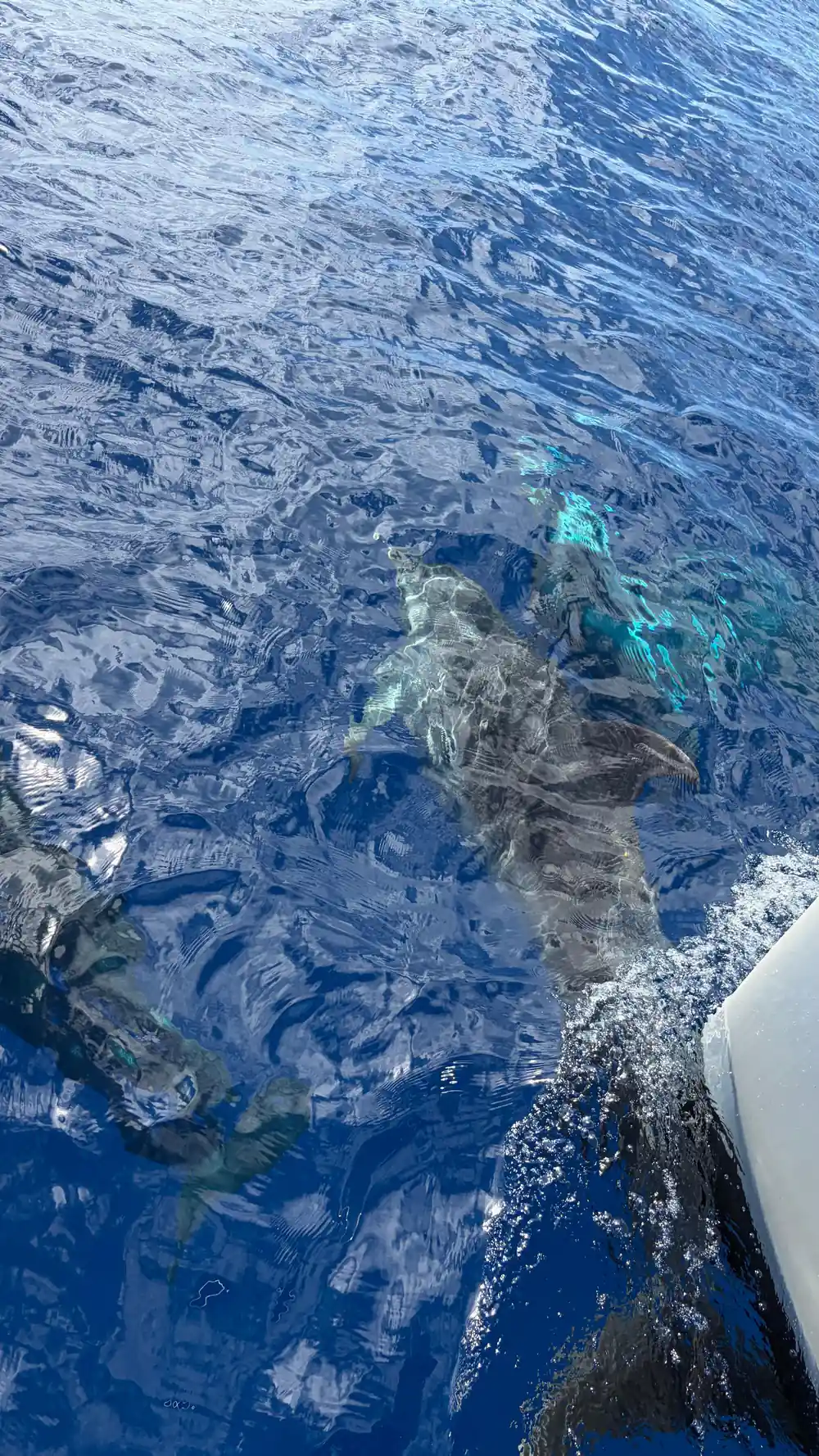
- Off Madeira, bottlenose dolphins show up every month, and short-finned pilot whales as well, so the calendar rarely stops a catamaran trip.[1]
- Around Funchal, the sea remains pleasantly mild, from roughly 18°C during winter to 24°C during summer, and swimming is possible for much of the year.[2]
- The Funchal Bay luxury catamaran cruise booked through this site sails for 3 hours, with a stop at Cabo Girão cliff and a live guide in Portuguese and English.[3]
- Just five kilometres offshore the sea drops more than 3,000 metres, letting deep-water whales come close to Madeira's coast.[4]
- Make your booking now and choose to pay later; cancel no later than 24 hours beforehand for a complete refund on the tour offered here.[3]
- Top choice Funchal Bay Luxury Catamaran from US$46 Duration3 hours[3]Live guidePortuguese, English[3]Free cancellationup to 24 hours in advance[3]Rating4.25 from 3,470 reviews[3] Check availability
- All Inclusive Luxury Tour from US$91 Duration3 hours[5]Live guideEnglish, Portuguese, Spanish[5]Free cancellationup to 24 hours in advance[5]Rating4.92 from 2,885 reviews[5] See this tour
- Ecological Catamaran from US$40 Duration2.5 - 3 hours[6]Live guideEnglish, Portuguese[6]Free cancellationup to 24 hours in advance[6]Rating4.55 from 10,022 reviews[6] See this tour
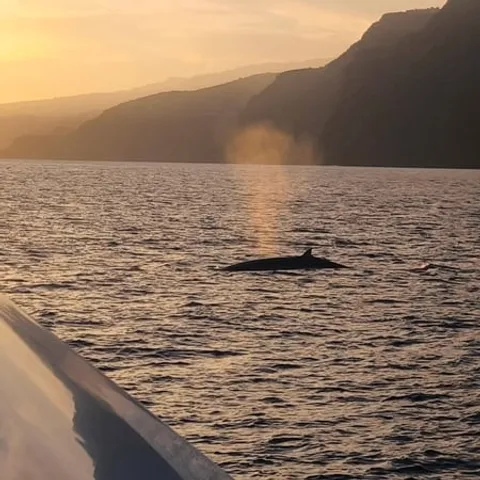
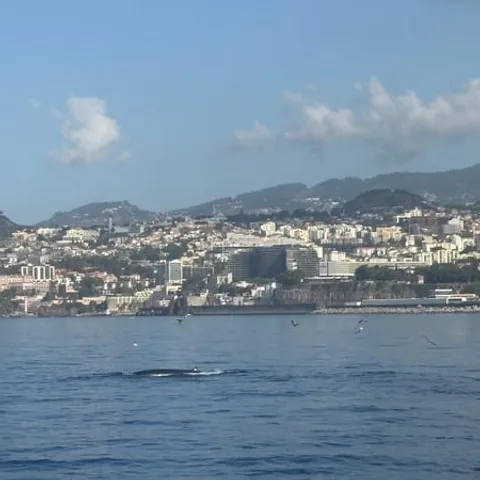
Sea temperatures remain pleasant, ranging from around 18°C in winter to 24°C in summer, allowing activities such as swimming and diving almost year-round.
So when should you sail?
Pack for the boat
Madeira barely has a winter
Funchal sits on Madeira's southern coast, and its mild climate makes sea trips easy to plan through most of the year. In Madeira's waters, bottlenose dolphins appear year-round, as do short-finned pilot whales, so you can enjoy the ocean without waiting for high summer.[1] The harbour is compact, departures are frequent, and the ocean feels like part of everyday life in the city. If you come from a colder climate, the lack of a real winter is the first surprise: streets stay busy, restaurants keep their terraces open, and the sea remains part of daily life. You can step off a flight, drop your bags at the hotel, and be on the water the same afternoon without needing to pack for a storm.
Off Funchal, winter sea temperatures sit around 18°C and summer around 24°C, a gentler Atlantic island condition than many travellers expect.[2] Even when the air feels cool, the water stays pleasant enough for a swim, and the catamaran offers sheltered seating when the wind picks up over the bay.
What this means for planning is simple: the winter months are not a closed season. You can build a full holiday around sailing, hiking and eating, with a catamaran trip as the watery centrepiece, whatever the calendar says. The choice becomes less about whether to sail and more about which month suits your own travel rhythm.
What actually changes: the sea
The most obvious seasonal change is water temperature. Around Funchal, winter sea temperatures sit near 18°C and summer ones near 24°C.[2] That difference matters if you plan to snorkel or swim, but the cruise itself follows the same gentle rhythm all year. In winter, a quick dip is enough; in summer, you can linger in the water without thinking twice.
Beneath the surface, the real drama is the sea floor. Just five kilometres offshore, depths exceed 3,000 metres, and steep underwater slopes and canyons bring deep-water whales close to the coast.[4] You do not need a marathon crossing to reach serious wildlife territory; the boat can be in deep water within a short sail from Funchal. Snorkellers will notice the difference between seasons more than anyone else: in summer the water feels almost bath-like, while in winter a wetsuit makes a longer swim more comfortable. The catamaran's low, wide deck also makes getting in and out of the water easier than from a smaller boat, so the tour suits a range of confidence levels.
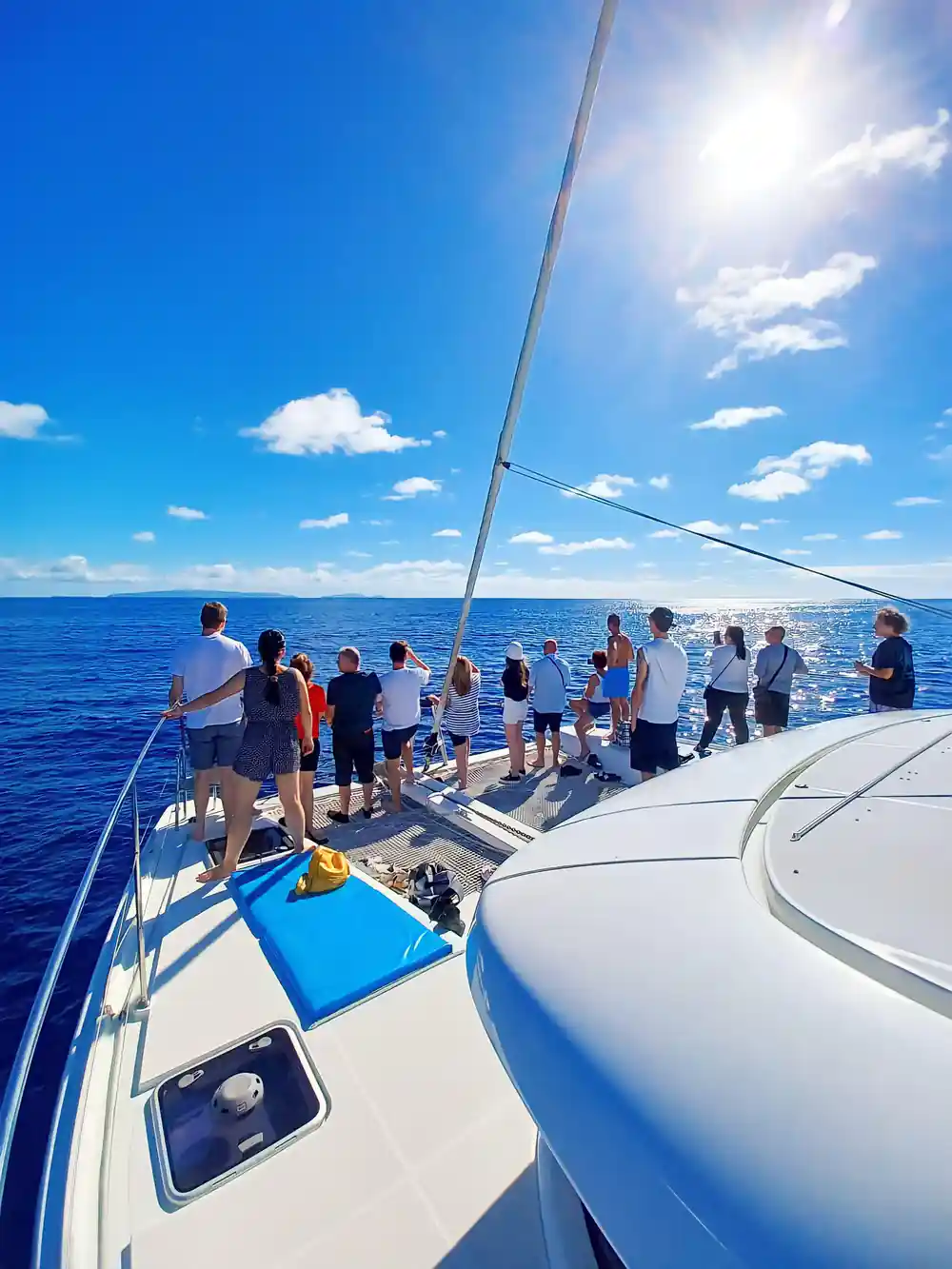
The route stays close to shore. You spend less time travelling and more time watching. A three-hour tour gives you a natural window to scan for blows, fins and breaches without eating up a whole day.[3] It is long enough to feel like a proper sail and short enough to fit around lunch or a lazy afternoon.
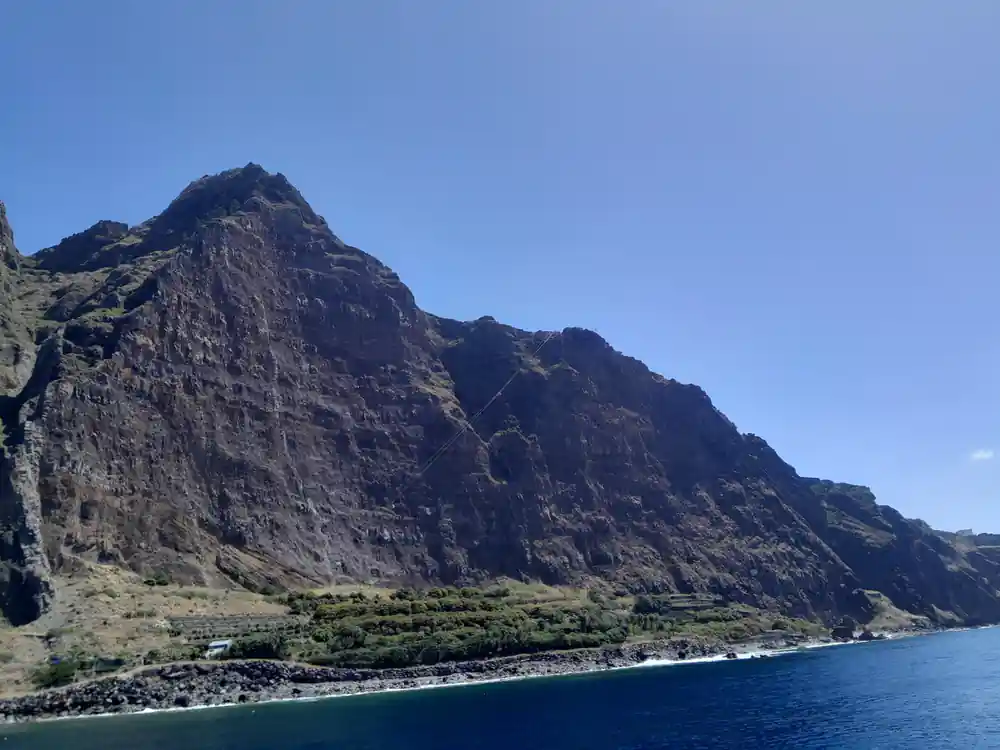
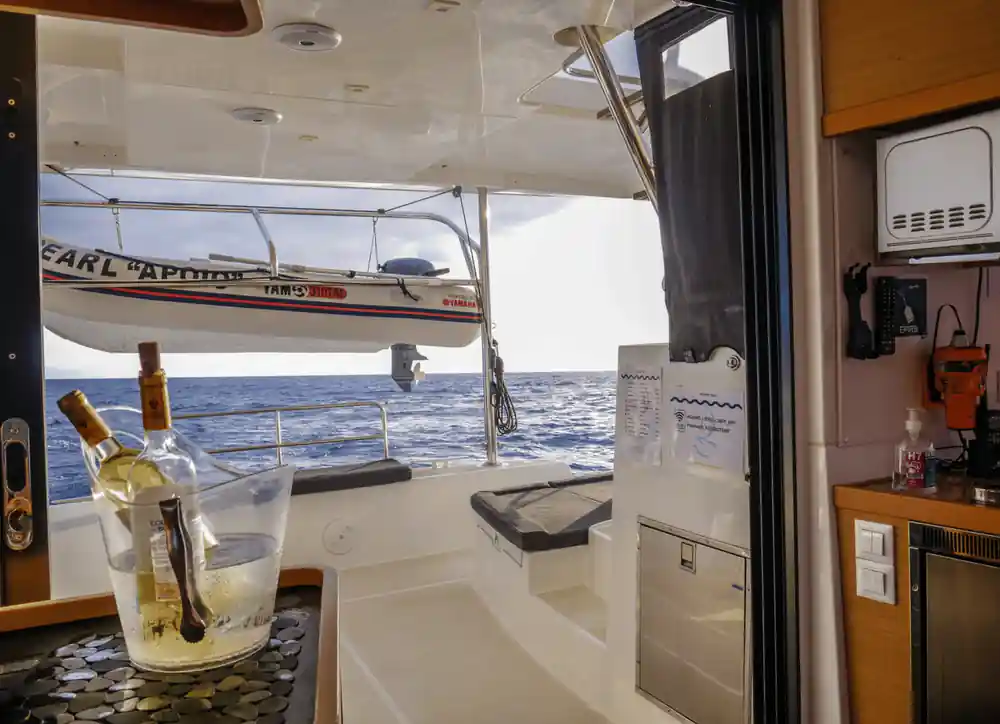
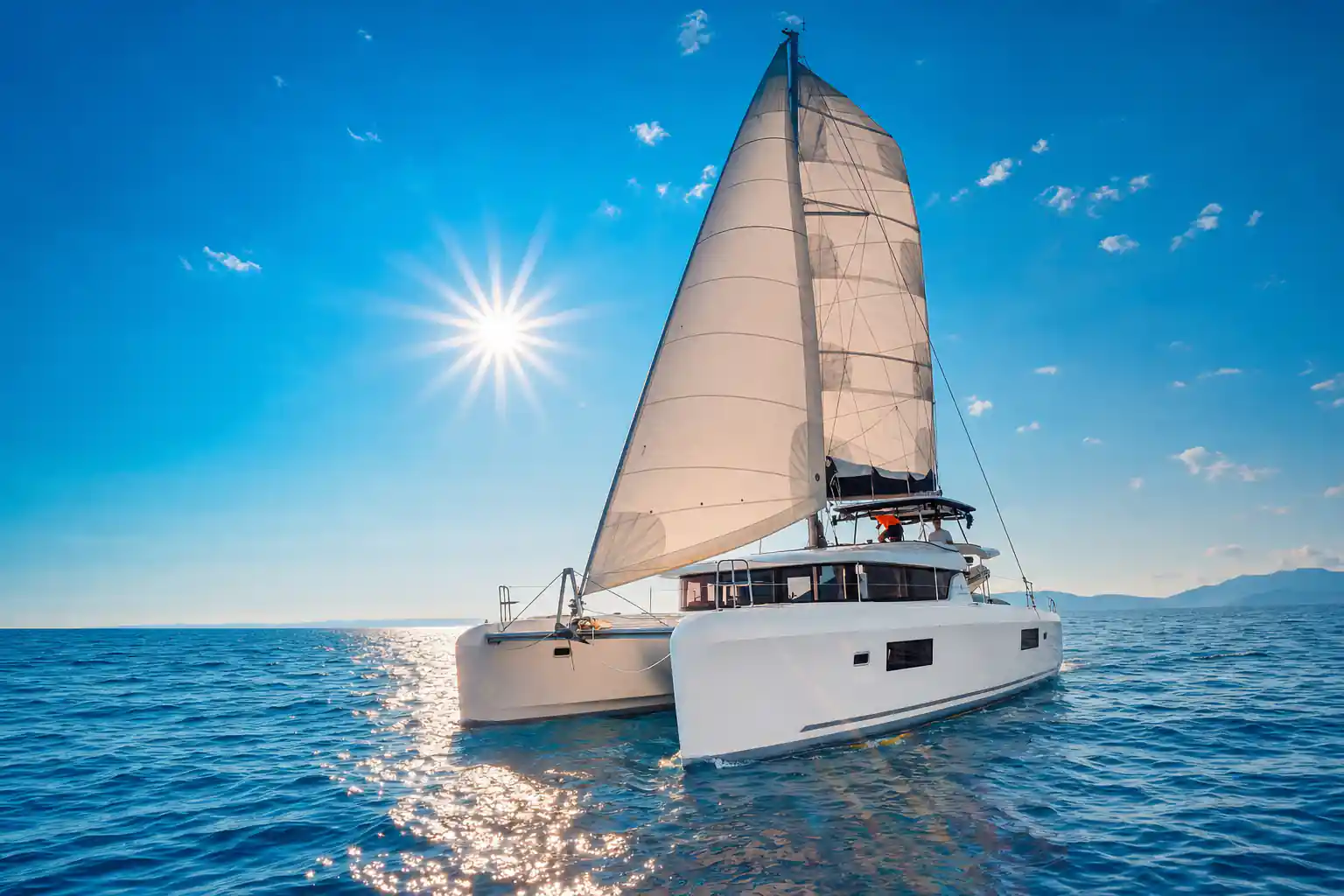
The Atlantic Pearl catamaran moored at the marina, ready for a dolphin and whale watch cruise.
The dry season is longer than you expect
Madeira's weather is famously local. The south coast, where Funchal sits, tends to be drier than the mountain peaks, and showers often pass quickly. A cloudy morning can clear into a bright afternoon, which makes the day feel more flexible than a mainland forecast suggests. The light is beautiful even when the sky is not completely clear: warm colours bounce off the cliffs, and the sea changes from deep blue to green within a single sail. Those partly cloudy days can produce lovely photographs, with softer light keeping the contrast manageable and the colours of the water rich.
For the best chance of calm conditions, book a morning sailing and keep the afternoon flexible. You can check starting times when booking, and many operators, including this one, let you reserve now and pay later.[3] That way you can make a last-minute call based on how the day actually looks.
A light rain shower should not put you off. The sea temperature stays pleasant, the catamaran has shaded areas, and the wildlife is just as active in soft drizzle as in full sunshine.[2] If anything, the fewer people on board can make a damp day feel more private.
Swell, wind and the state of the sea
Swell and wind matter more than rain when you are on a catamaran. The Atlantic is not a swimming pool, but the boats used for whale watching are built for stability, and skippers adjust speed and heading to the day's conditions. That local knowledge is part of what makes a guided trip reassuring.
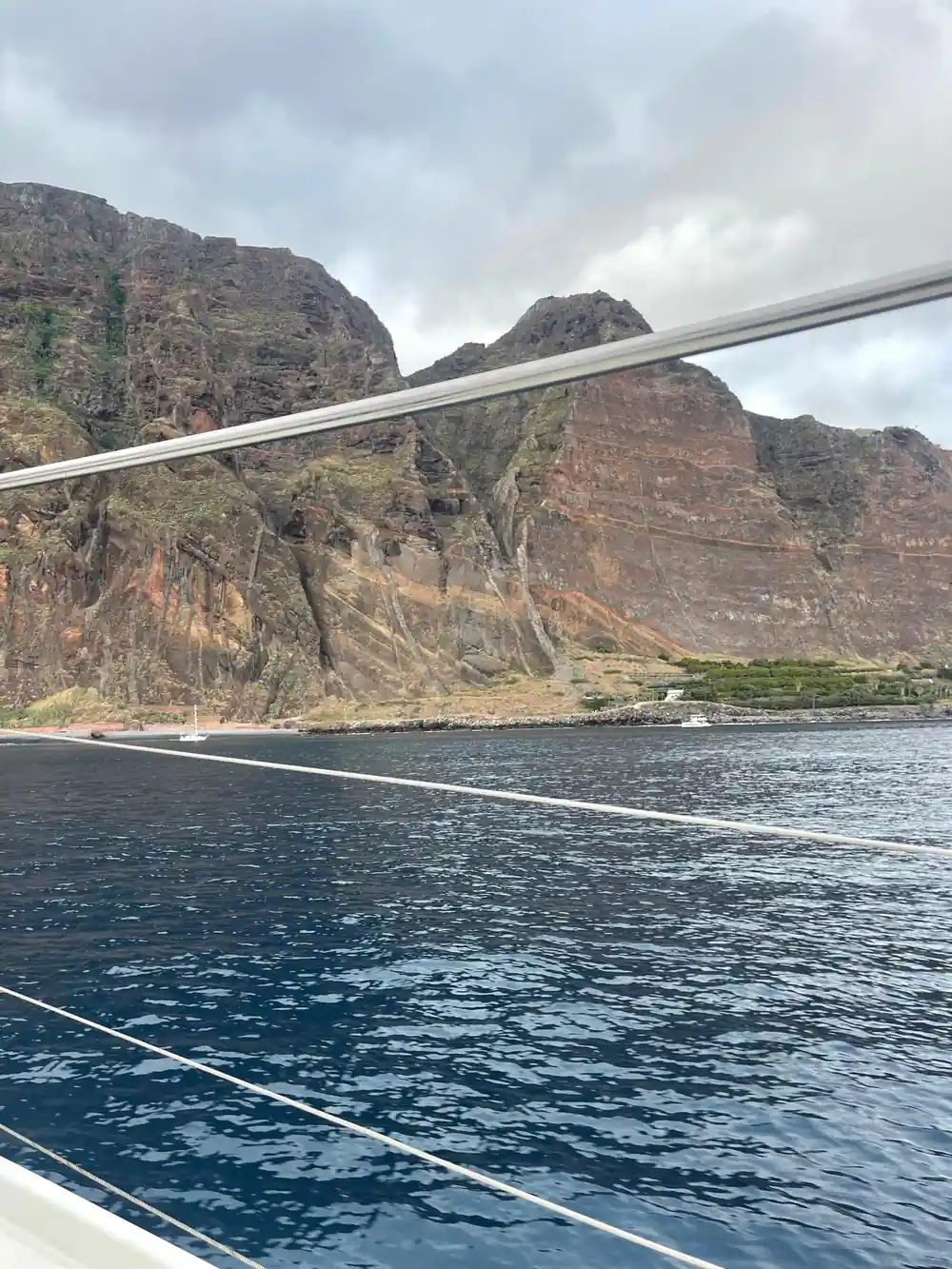
One landmark shows why the Funchal coast is so dramatic. The official Madeira tourism board says the sea cliff of Cabo Girão is 580 metres high.[7] The Funchal Bay luxury catamaran cruise includes a stop at Cabo Girão cliff, so you can appreciate its scale from the water.[3]
If you are nervous about motion, pick a sheltered departure and avoid the most exposed positions on deck. The available tours run for 3 hours, which is short enough to be enjoyable and long enough to feel like a proper sail.[3] You can also ask the crew for advice on where to sit once you board. The crew also watches the swell forecast in the days before departure. If conditions look rough, they may choose a different heading or slow the pace, and that flexibility is part of the value of going with a guided operator. On a calm day, the hull moves smoothly and you can stand at the bow without holding on too tightly.
from US$46
Set sail from Funchal Bay on the luxury catamaran cruise booked from this site: 3 hours, live guide, a Cabo Girão stop, and free cancellation up to 24 hours before.[3]
Wildlife across the year
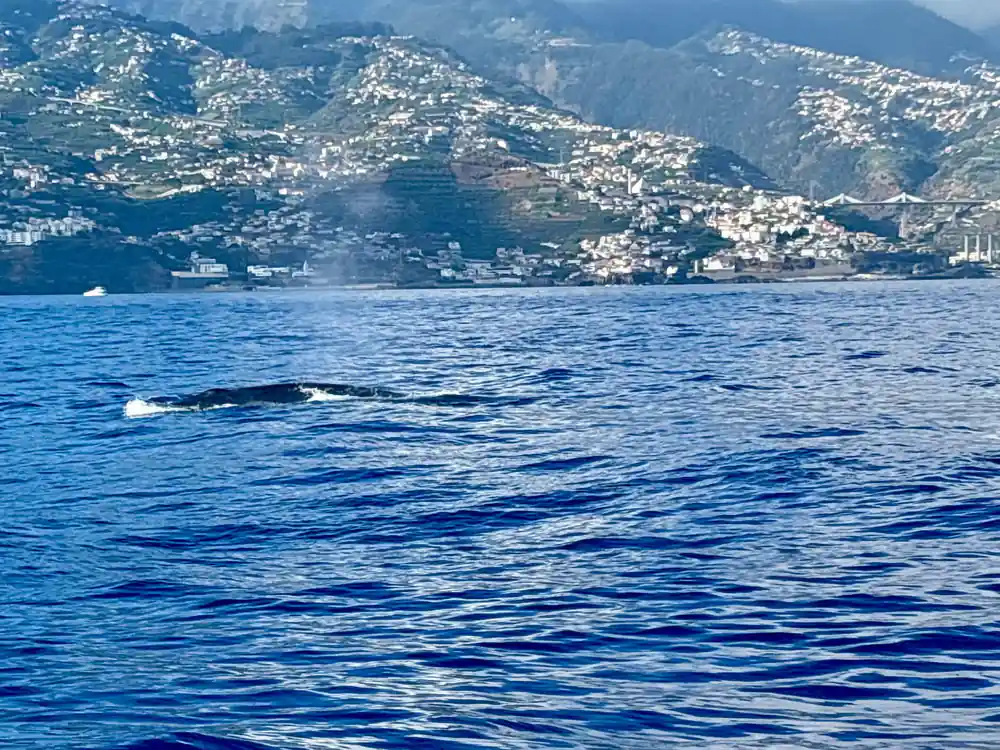
Madeira is a genuine hotspot for cetaceans. Researchers have confirmed 27 species in the surrounding waters, almost a third of the planet's known species.[1] You cannot guarantee any single animal, but the diversity is remarkable for such a small island. Bring a pair of binoculars if you have them: they help you spot blows on the horizon before the boat turns towards them, and they make the sight of a whale tail much more memorable. If you do not own a pair, the crew can often point out where to look, and the dolphins usually come close enough to see clearly with the naked eye.
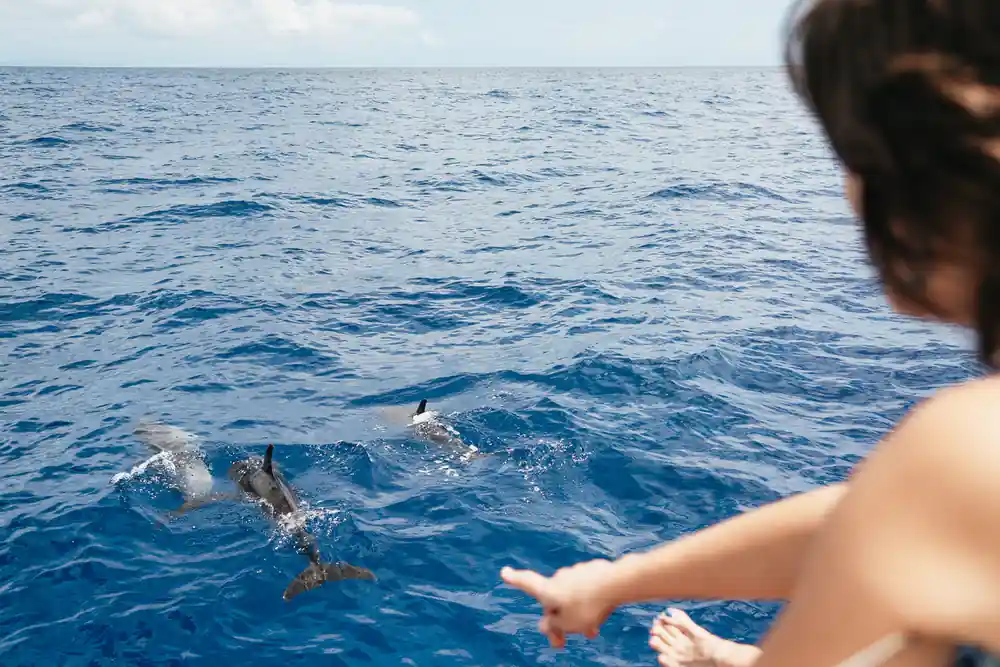
The seasonal cast changes throughout the year. Bottlenose dolphins and short-finned pilot whales are reliable all year, Atlantic spotted dolphins and occasional blue whales arrive seasonally, and orcas and humpback whales show up rarely.[1] The exact combination you meet will depend on the month, the weather and a little luck.
For that reason, the best month is often the one when you are already in Madeira. A 3-hour cruise from Funchal gives the crew time to share knowledge and search the right water, with a live guide in Portuguese and English.[3] You can learn a lot just by watching how the team works the ocean.
Crowds and how busy it feels
The harbour at Funchal is busiest in the summer months. Families fill the marina, morning departures sell out quicker, and the decks feel livelier. If you prefer a quieter trip, the shoulder months are a good compromise, and the ocean still delivers the same wildlife-rich experience. If you travel at the height of summer, expect a festive feel at the marina: queues are longer, but the atmosphere is lively, and there is a good chance of sharing the water with other boats watching the same animals. The crew keeps a safe distance, so you still get a clear view without the chaos.
The luxury catamaran tour booked from this site offers skip-the-ticket-line access, which smooths the boarding process even on a busy day.[3] Once you are on the water, there is usually plenty of space to find your own viewpoint and settle in with a drink.
For the calmest feeling, look at sunset sailings. The day's heat fades, the light turns golden, and the mood becomes more relaxed. You still get the ocean, the wildlife and the view of Cabo Girão, but with a gentler pace and a camera-friendly sky.
So which month
Choose summer if you want the warmest water: the sea off Funchal reaches 24°C.[2] Choose winter if you prefer a quieter Madeira and do not mind a sea temperature of around 18°C; the year-round dolphins and pilot whales are still there.[1][2] In between, spring and autumn offer a balance of comfortable water and softer crowds. Leave a day of flexibility in your schedule: if the wind is strong on the day you planned, a later departure may be calmer, and a morning sail can happen before the breeze builds. With free cancellation, you can make that choice without losing money.[3]
The practical answer is to let your own calendar decide, then book with free cancellation so you can adapt if the forecast changes. From US$46, the 3-hour Funchal Bay luxury catamaran cruise offers free cancellation for a full refund up to 24 hours ahead.[3]
Whenever you go, you get a 3-hour escape from the city, a live guide, a stop at Cabo Girão, and the chance to see dolphins or whales in the wild.[3] The best time of year for a catamaran trip in Madeira is simply the time when you can actually get there.
Catamaran passenger capacity
Capacities of VMT Madeira's three catamarans in passengers:[8].
Compare whale watching from-prices
US dollar from-prices are from GetYourGuide listings[3][5][6][9]. Child pricing not listed; check availability.
Planning your catamaran trip
How to choose and book
Decide your season
Madeira works all year for dolphin and whale watching, so start with your travel dates. Warmest sea? Summer. Quieter harbours? Winter still feels mild.[1][2]
Check the route
The Funchal Bay luxury catamaran cruise lasts 3 hours and includes a stop at Cabo Girão cliff, with a live guide speaking Portuguese and English.[3]
Compare from-prices
Whale watching tours start at US$40 for an ecological catamaran and go up to US$91 for an all inclusive option, so compare what matters to you.[5][6]
Book with flexibility
Choose tours that offer reserve now and pay later and free cancellation for a full refund up to 24 hours ahead.[3]
Pack for the deck
Bring sun protection and a windproof layer. Winter sea temperatures are around 18°C, while summer ones reach 24°C.[2]
Ready to trade Funchal's streets for the open Atlantic?
from US$47Reserve now & pay later