The quick version
- Three hours on a luxury catamaran with a live Portuguese and English guide, and space to move around.[1]
- Blue whales and Atlantic spotted dolphins are seasonal visitors; short-finned pilot whales and bottlenose dolphins stay all year.[2]
- In Madeira, seawater is around 18°C during winter and 24°C during summer. Pack a layer even on sunny days.[3]
- At just five kilometres offshore, depths exceed 3,000 metres, which pulls deep-water whales near the coast.[4]
- Book today and pay later; cancellations remain free until 24 hours beforehand.[1]
- Top choice Bay Luxury Catamaran from US$46 Duration3 hours[1]GuidePortuguese, English[1]CancellationFree cancellation up to 24 hours[1] Check availability
- All Inclusive Luxury Tour from US$91 Duration3 hours[5]GuideEnglish, Portuguese, Spanish[5]CancellationFree cancellation up to 24 hours[5] See this tour
- Responsible Watching Tour from US$62 Duration2 hours[6]GuideEnglish[6]CancellationFree cancellation up to 24 hours[6] See this tour
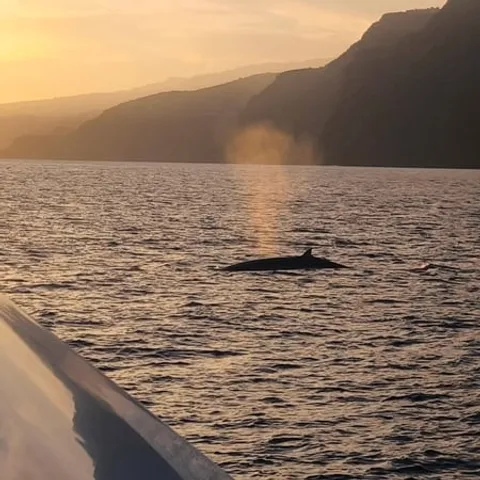
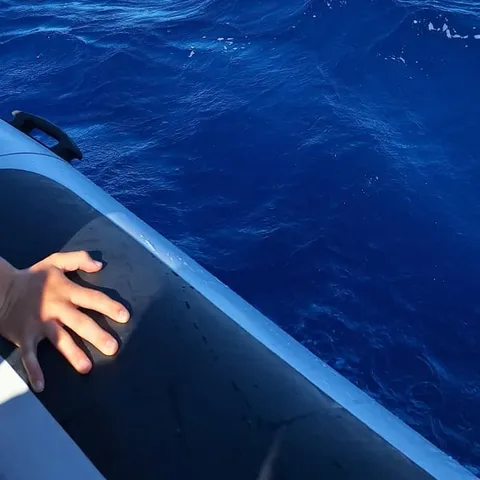
Bottlenose dolphins and short-finned pilot whales can be encountered all year round, along with deep divers like sperm whales and beaked whales.
Who should book
On the day
The one published exclusion
The honest starting point for a catamaran Funchal with kids decision is what the tour excludes. The listing publishes no age limit, no fitness test and no swimming requirement; it simply describes a 3-hour dolphin and whale watch on a luxury catamaran.[1] That matters because a boat trip with children is rarely about the brochure. It succeeds or fails on comfort, seating, shade and the patience of everyone on board.
The route keeps things simple: from the catamaran to a secret stop, on to Cabo Girao Cliff, then back to the catamaran.[1] At 580 metres, Cabo Girao is a dramatic landmark from the water.[7] A secret stop may mean a swim or simply a slow drift, depending on conditions and the operator. Either way, the boat remains your base, so there is no need to commit to anything beyond the cruise itself.
So the only published exclusion is time: you get 3 hours[1], not half a day. That suits families who want an introduction to whale watching without committing to a full-day trip. It also leaves enough of the day for a garden, a museum or a meal in the old town. If a child melts down, the tour is not too long to recover from.
Children on board
Children are the heart of the question. Lasting 3 hours[1], the cruise feels substantial yet still leaves time for a stroll or an early dinner. A live guide in Portuguese and English[1] keeps the story moving without asking kids to read anything. The catamaran layout gives them room to stand at the rail, sit on shaded benches, or move between the two as interest allows.
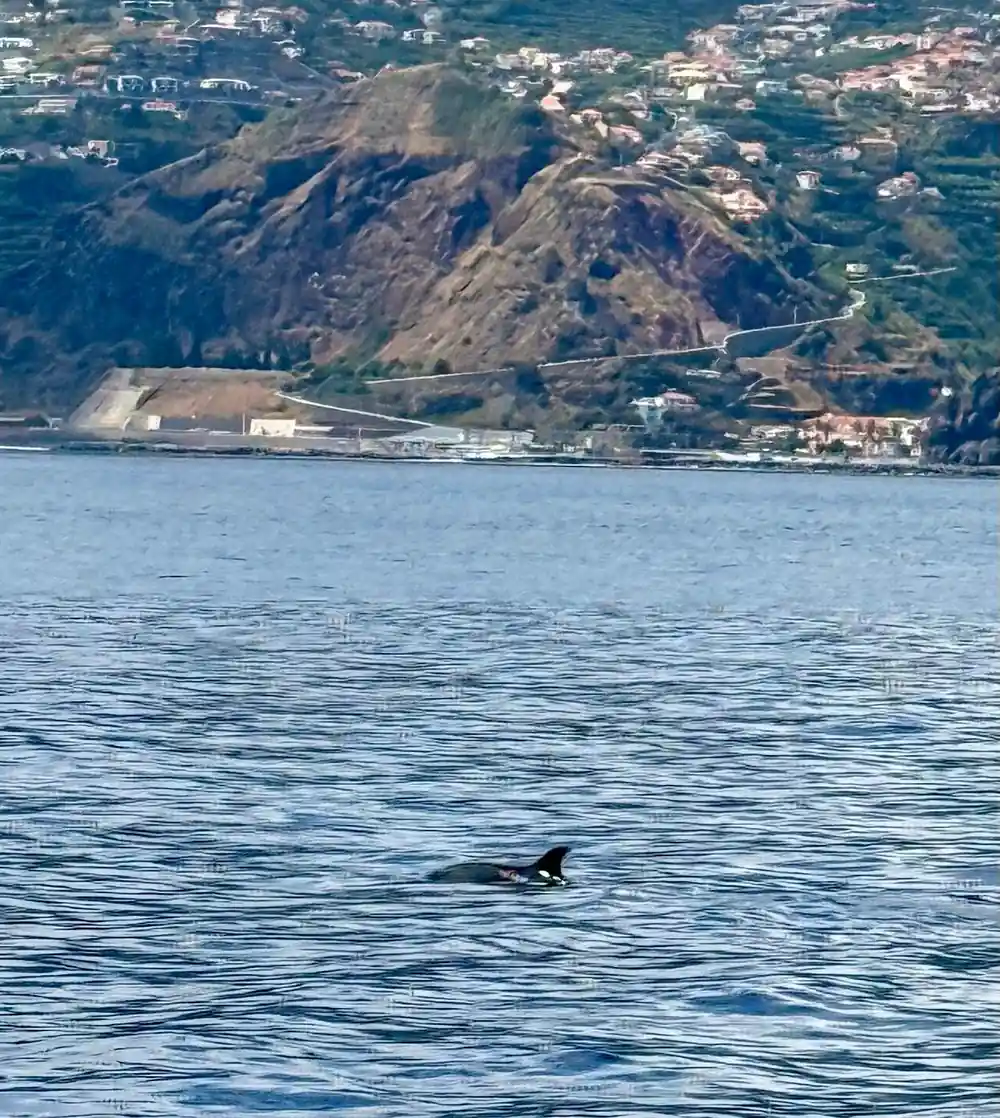
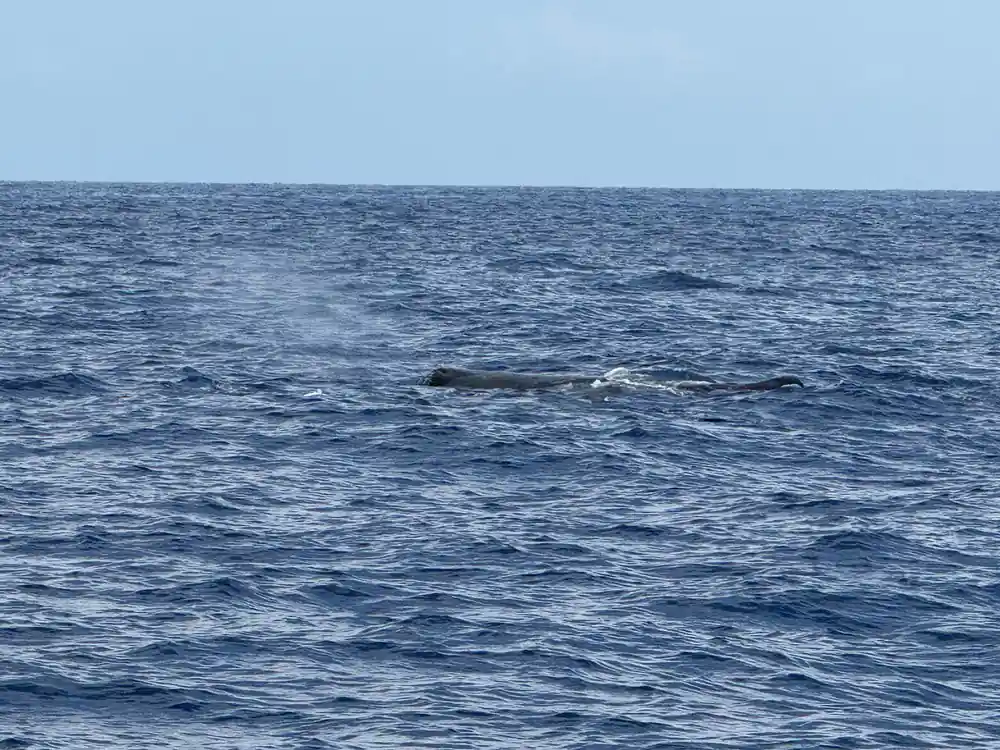
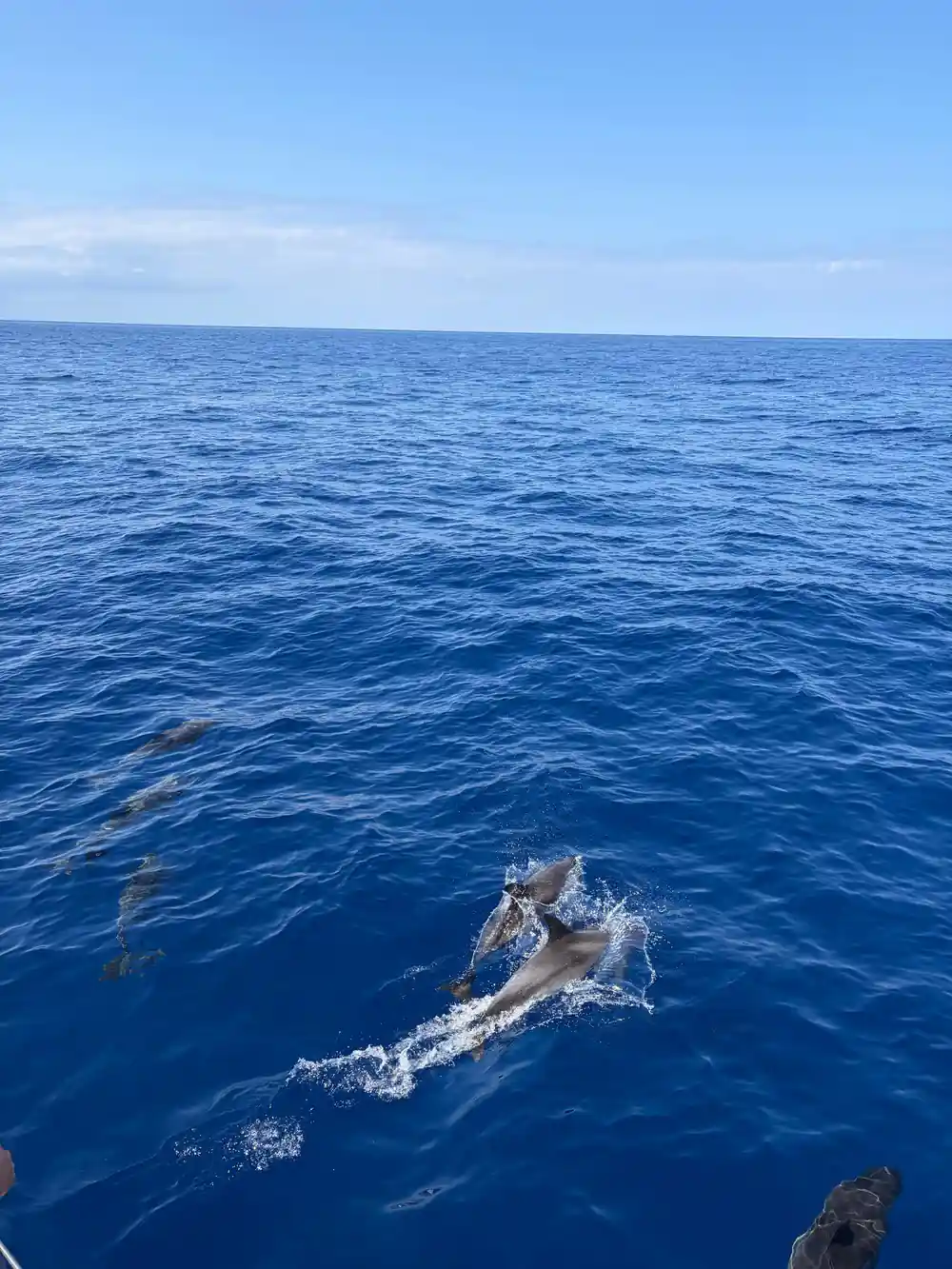
What they might see is exciting. In Madeira's waters, 27 species of cetaceans have been confirmed by researchers.[2] All year, bottlenose dolphins and also short-finned pilot whales are visible; Atlantic spotted dolphins plus uncommon blue whales depend on the season.[2] Orcas and humpback whales are rarely seen.[2] For children, the promise of dolphins is usually enough; the calm, steady pace of the boat means nobody feels rushed.
Sea temperature is part of the plan. Off Madeira, the sea sits around 18°C in winter and reaches 24°C in summer.[3] That means a warm layer for shoulders, especially when the boat is moving. A towel, a sun hat, sunscreen and a small snack will cover most family needs. The boat has shaded sections, so there is a place to escape the sun between sightings, and a drink helps on hotter afternoons.
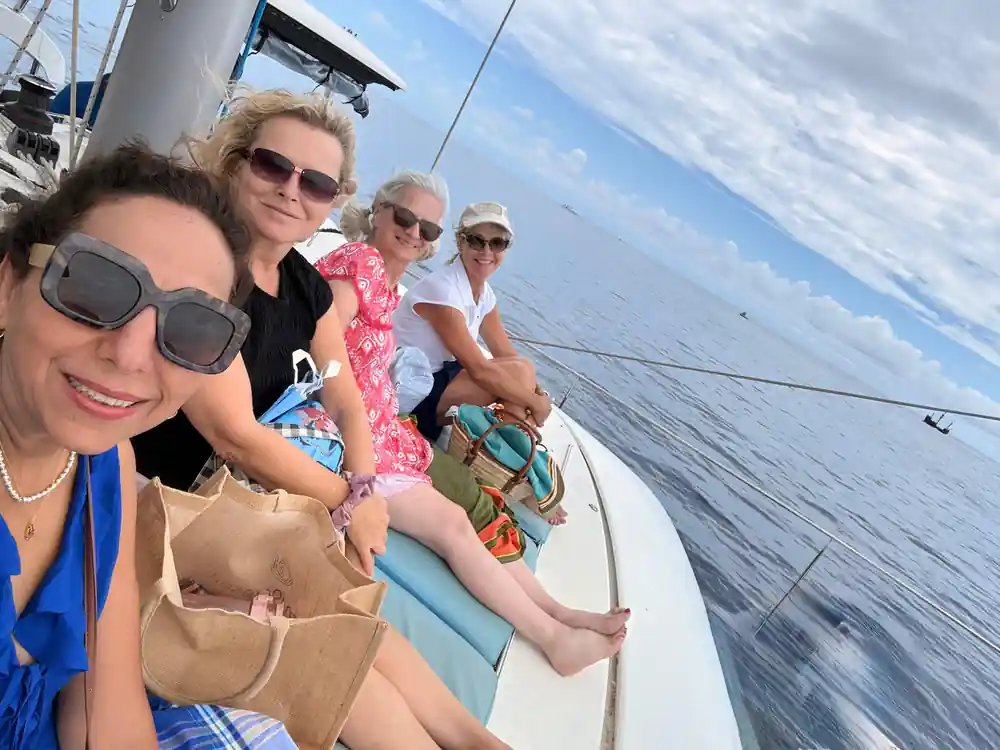
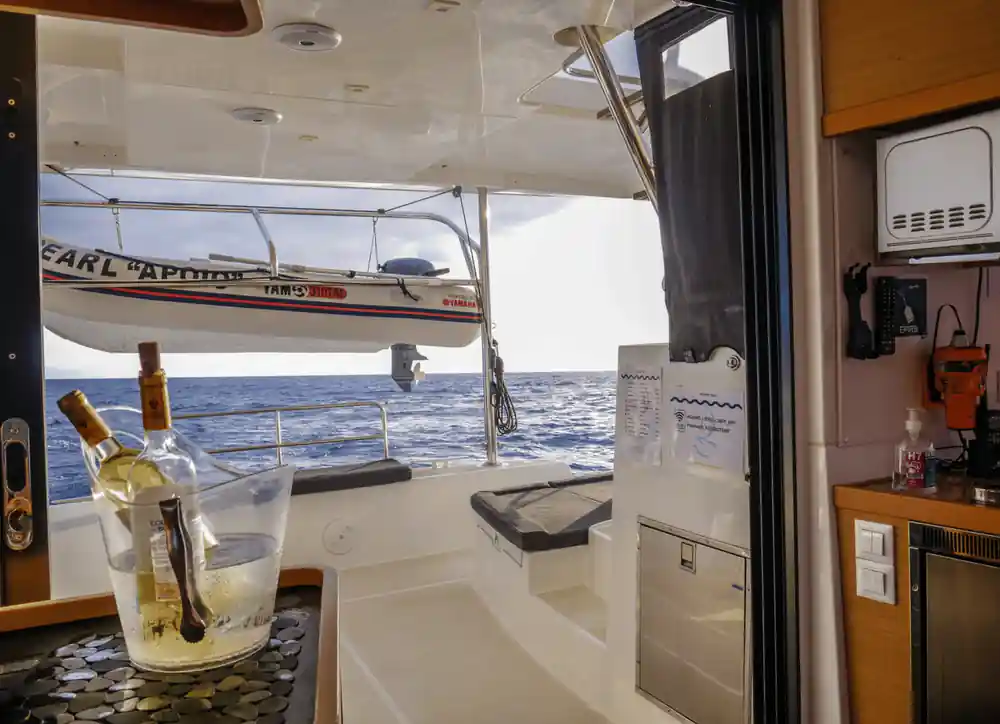
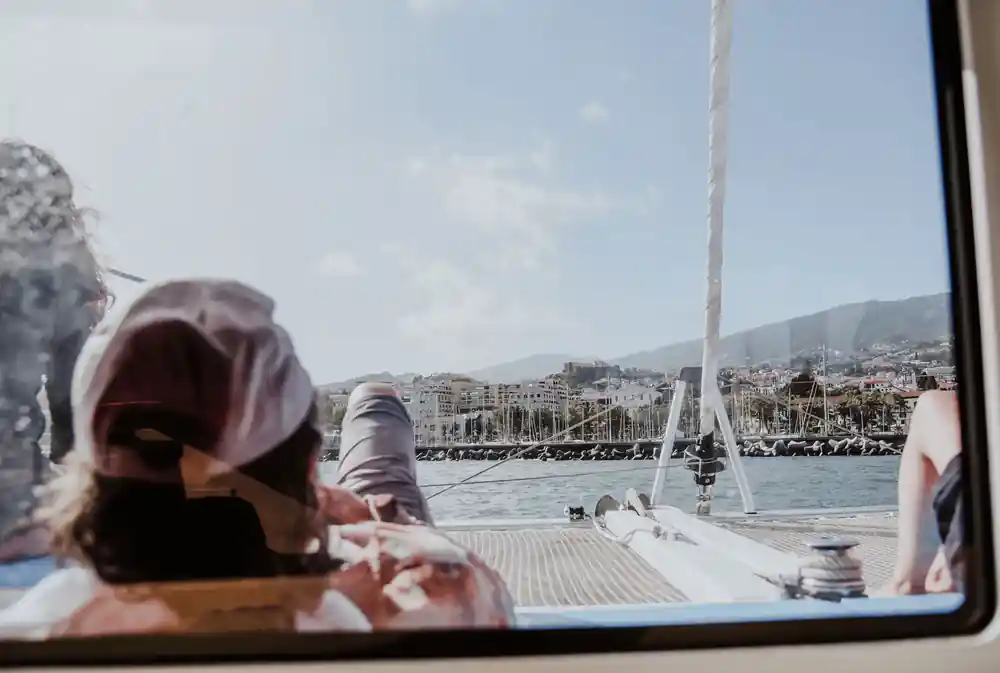
Watching the Atlantic from the shaded cockpit of the Atlantic Pearl, with Funchal's coast falling away aft.
Older travellers
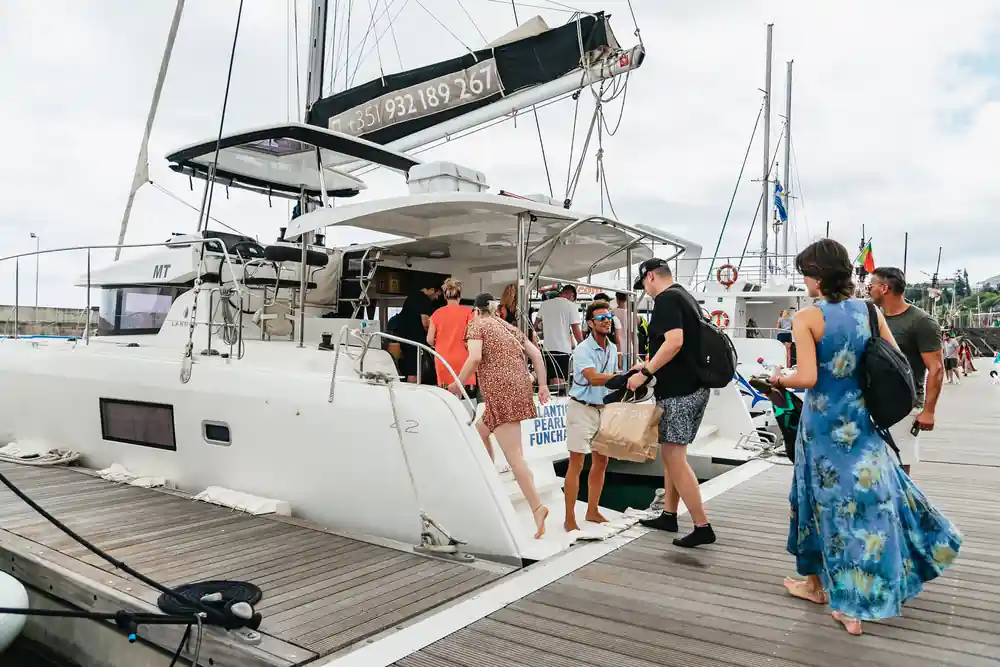
Older travellers usually enjoy this cruise because a catamaran provides deck space to stand, sit or stretch without feeling crowded. It lasts 3 hours[1], and the live guide in Portuguese and English[1] means you are never just staring at water. Boarding is from a marina pontoon, and the crew are used to helping passengers find a comfortable spot before the boat leaves.
The water does the work. Only five kilometres from shore, the sea floor drops beyond 3,000 metres, letting large cetaceans come near the island.[4] You get the wildlife without a long open-ocean crossing. For older travellers who want to see whales but worry about a rough ride, the deep water close to shore is the reason this coast is so dependable.
For anyone with mobility questions, the practical fix is to board calmly, choose a shaded seat and ask the crew for a hand. The tour is 3 hours[1], and sea temperatures range from around 18°C to 24°C[3], so comfort is mostly about layers and seating. A small cushion, a bottle of water, and a light jacket can make an ordinary trip great.
Seasickness and stability
No boat is entirely motion-free, but a catamaran is steadier than a small RIB. The trip takes 3 hours[1], which is short enough to plan around a meal. If you are prone to seasickness, eat lightly before boarding and choose a seat near the middle of the boat. Looking at the horizon rather than a phone screen helps, and there is plenty of horizon to look at.
Off Madeira, winter sea temperatures sit near 18°C, while summer readings reach 24°C.[3] Cooler months can bring a livelier sea, so a calm morning is usually the safer pick. A full refund is possible if you cancel at least 24 hours before, giving you room to change plans when the forecast looks rough.[1] That flexibility is especially useful for families travelling with children who are new to boats.
Fresh air is the best medicine. A catamaran has open rail space and shaded spots, so no one has to stay below. Keep your eyes on the horizon, look for dolphins at the bow, and most children settle into the rhythm within the first part of the trip. If someone still feels queasy, the crew can point you to the freshest spot on board.
from US$46
A luxury catamaran dolphin and whale watch from Funchal with a live guide and free cancellation.
Non-swimmers and nervous swimmers
Non-swimmers can enjoy this trip without ever leaving the deck. The published route goes from the catamaran to a secret stop, on to Cabo Girao Cliff, and back to the catamaran.[1] If the secret stop is a swim stop, staying aboard is your choice. There is no need to carry swimwear unless you actually want it.
The wildlife is the point. Throughout the year, short-finned pilot whales and bottlenose dolphins are observed; Atlantic spotted dolphins, along with occasional blue whales, appear seasonally.[2] You do not need snorkel gear to appreciate that. The guide points out what is happening, and the animals often do the rest by surfacing close to the hull.
A clear plan helps nervous swimmers. The cruise is 3 hours[1], the guide speaks Portuguese and English[1], and there is a shaded cockpit to use as a base. Watch from the rail, listen to the commentary, and stay dry. You can still be the first to spot the dorsal fin, which is half the fun.
Language on board
Language is rarely a barrier. This cruise has a live tour guide in Portuguese and English.[1] English speakers get live context on the bay, the cliffs and the animals. The commentary is shared rather than personal, so you can dip in and out while helping children spot wildlife.
Madeira's whale watching history adds texture. The island's whaling industry has since ended, and a guide might explain how Madeira moved from hunting to watching. That story lands well with older children. It gives the trip a sense of place that goes beyond any single sighting.
The crew also receives practical help from shore. A spotter on land helps guide boats, sharing mileage and landmarks with the captain.[8] That keeps the tour focused on finding wildlife rather than searching aimlessly. It also means the guide can spend less time looking for animals and more time explaining what everyone can see.
Group size and the feel of it
The feel of this cruise is sociable but relaxed. It is a scheduled 3-hour catamaran trip with a live guide[1], not a demanding private expedition. Families, couples and solo travellers share the deck. If you are happy to be part of a group, the energy tends to be positive, with children comparing sightings across the boat.
Because the catamaran has room to move, you are not tied to one seat. A 3-hour trip[1] keeps the energy comfortable, and the live guide[1] sets the tone without making it feel like a lecture. The mix of nationalities and ages means no one feels out of place.
If you want a different feel, the all-inclusive luxury tour costs from US$91[5], and the responsible watching tour costs from US$62[6]. Both are good alternatives, but this Funchal bay cruise is a straightforward first choice for many families. It has the right length, a live guide, and a booking policy that leaves room to change plans.
From prices of three popular Funchal whale watching tours
Compare from prices in USD
From prices stated by[1],[5],[6].
When to plan around
Plan your trip
Pick your date
Look at availability for starting times for the 3-hour catamaran cruise.[1]
Reserve
Use reserve now, pay later to hold your places without paying today.[1]
Stay flexible
If plans change, you can cancel for free up to 24 hours before and get a full refund.[1]
Arrive ready
Skip the ticket line and board with comfortable layers, suncream and seasickness tablets if needed.[1]
Plan your catamaran Funchal with kids family day now
from US$47Reserve now & pay later